How Long Does a Dental Bone Graft Take to Heal? Recovery Timeline
How Long Does a Dental Bone Graft Take to Heal? Recovery Timeline
If you are preparing for dental implants or have recently had bone grafting, one of the first questions you may ask is how long does a bone graft take to heal?
For many dental bone grafts, the initial soft-tissue recovery takes about one to two weeks, while the grafted bone usually needs several months to mature and integrate with your jawbone. A common healing period before implant placement is around 3 to 6 months, although larger or more complex grafts may require longer. Cleveland Clinic notes that a dental bone graft generally needs at least three months to heal, while larger grafts can take nine to 12 months.
The exact timeline depends on the type and size of the graft, where it was placed, your oral health, smoking status, medical history, and how well the surgical site heals.
If you are considering grafting because of jawbone loss, InStyle Dental provides dental bone grafting in New York City to rebuild bone and prepare suitable patients for treatments such as dental implants.
How Long Does a Dental Bone Graft Take to Heal?
A useful way to understand bone graft healing is to separate how quickly you feel better from how long the bone itself takes to heal.
Most patients begin feeling substantially more comfortable within the first week or two. Swelling, tenderness, and bruising generally improve during this early recovery period.
The bone underneath, however, continues remodeling for much longer.
For many cases:
- First few days: swelling, tenderness, and minor bleeding may occur.
- Around 1 week: the surgical site usually begins feeling considerably better.
- 1 to 2 weeks: soft-tissue healing continues and many routine activities become easier.
- Around 3 months: some grafts may have developed enough new bone for further evaluation.
- 4 to 6 months: this is a common timeframe for graft maturation before dental implant placement in appropriate cases.
- 6 to 12 months: larger or more complicated grafts may require additional healing time.
Cambridge University Hospitals advises that bone grafts used for dental implants may take approximately four to six months to heal before implant placement in certain cases.
So when patients ask how long do bone grafts take to heal, there is no single deadline that applies to everyone.
What Actually Happens While a Dental Bone Graft Heals?
A dental bone graft does more than simply “fill a hole.”
The graft material acts as a framework that supports the development of new bone in an area where bone volume is inadequate.
Over time, your body's healing process gradually remodels the grafted area and forms new bone.
This process is particularly important when grafting is performed before dental implants in New York City, because an implant needs adequate bone volume and quality for stable placement. InStyle Dental notes that preparatory bone grafting may be recommended when the jaw does not have sufficient density for an implant.
The surface of your gums can therefore appear healed well before the deeper bone has fully matured.
That is why feeling normal again does not automatically mean the graft is ready for an implant.
Dental Bone Graft Healing Timeline
First 24 to 72 Hours
The first few days are usually when swelling and tenderness are most noticeable.
You may experience:
- Mild to moderate soreness
- Swelling around the surgical area
- Minor bruising
- Slight bleeding or oozing
- Tightness around the stitches
- Difficulty chewing directly over the graft
Swelling can peak around the second day after surgery.
Follow the aftercare instructions provided by your dentist or oral surgeon rather than relying on a generic recovery routine.
Days 4 to 7
Discomfort should generally begin improving rather than becoming progressively worse.
During this stage:
- Swelling usually starts settling
- Eating becomes easier
- The gum tissue begins closing over the graft
- Stitches may still be present
- The surgical area may remain sensitive
Some patients notice tiny grain-like particles near the surgical area. Cleveland Clinic notes that small graft particles can occasionally come out during the first few days and may resemble grains of sand or salt. A large amount of lost graft material, however, should be reported to your dental provider.
For questions about surgery and postoperative expectations, InStyle Dental's oral surgery services in New York cover procedures including bone grafting, dental implants, and tooth extraction.
Weeks 1 to 2
By this point, many patients feel significantly more comfortable.
Depending on your procedure, stitches may dissolve or be removed during a follow-up appointment.
Your dentist will check:
- Gum healing
- Signs of infection
- Graft exposure
- Swelling
- Wound closure
- Overall recovery
Even if everything looks healed from the outside, the deeper graft is still undergoing biological integration.
Weeks 3 to 8
Most day-to-day symptoms are typically minimal by this stage.
The graft is continuing to remodel underneath the gums, and new bone is gradually developing within the treated area.
You usually will not be able to judge this process simply by looking at the gum.
This is why follow-up examinations and, when appropriate, dental imaging matter.
Around 3 to 6 Months
For many implant-related grafts, this is the key evaluation period.
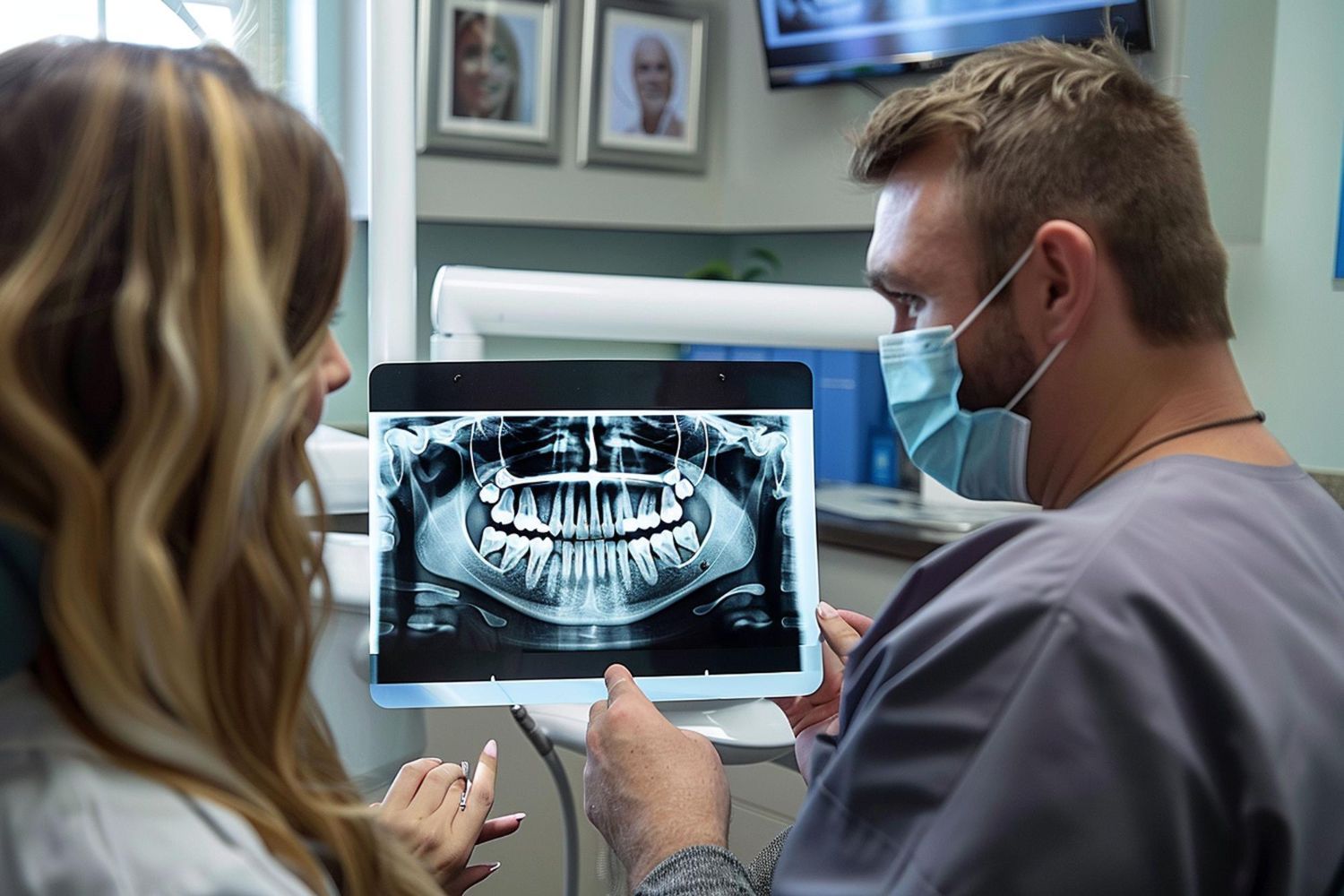
Your dentist may use clinical examination and dental imaging to determine whether sufficient bone has formed to support an implant.
Guy's and St Thomas' NHS Foundation Trust notes that bone grafting can add approximately four to six months to an implant treatment timeline when additional bone is required.
If the graft has matured adequately, the next phase may involve implant placement.
Patients planning this stage can learn more about the full dental implant treatment process.
Beyond 6 Months
Some grafts need considerably longer.
A larger graft, significant pre-existing bone loss, complex reconstruction, or individual healing factors may mean the site requires six months or more before it is ready for the next procedure.
Cleveland Clinic reports that large dental bone grafts may sometimes require nine to 12 months for full healing.
Your own treatment timeline should therefore be based on clinical healing rather than a calendar alone.
What Determines How Long a Bone Graft Takes to Heal?
When someone asks how long does it take a bone graft to heal, several factors need to be considered.
Size of the Bone Graft
A small socket-preservation graft after an extraction is different from reconstructing a larger section of deficient jawbone.
In general, more extensive grafting can require more healing time.
Location of the Graft
Bone quality and anatomy differ throughout the upper and lower jaw.
For example, patients who lack enough bone below the maxillary sinus may require a sinus lift in New York City, which adds bone in the upper posterior jaw to create enough support for future implant placement.
The healing plan for this type of augmentation may differ from a small extraction-site graft.
Type of Graft Material
Dental grafts may use:
- Autograft material from your own body
- Allograft material from a human donor source
- Xenograft material from an animal source
- Synthetic graft materials
The appropriate material depends on the procedure and individual treatment plan.
Different graft materials remodel at different rates, so patients should not compare recovery times solely based on someone else's experience.
Your General and Oral Health
Healing can also be influenced by factors such as:
- Periodontal health
- Smoking or vaping
- Medical conditions
- Certain medications
- Oral hygiene
- Nutrition
- Infection
- The extent of existing bone loss
Periodontal disease can contribute to destruction of the tissues and bone supporting teeth. Patients with gum-related bone loss may therefore need their periodontal condition stabilized as part of a larger treatment plan. InStyle Dental provides periodontal disease treatment in New York for patients with gum and supporting-tissue concerns.
Following Postoperative Instructions
The first phase of healing is important because the surgical site needs to remain protected.
Your clinician may give instructions about:
- Food consistency
- Oral hygiene
- Mouth rinses
- Physical activity
- Smoking
- Alcohol
- Medication
- Denture use
Follow the instructions provided specifically for your procedure.
How Long Does Bone Graft Take to Heal After Tooth Extraction?
Bone grafts are often placed at the time of tooth removal to preserve or rebuild the socket.
The gum tissue may heal relatively quickly, but bone development occurs over several months.
If you need an extraction before grafting, InStyle Dental's tooth extraction services in New York City include surgical evaluation and treatment planning for teeth that cannot be predictably restored.
The exact waiting period before an implant depends on factors including:
- Why the tooth was removed
- Presence of infection
- Remaining bone volume
- Size of the graft
- Implant location
- How the graft appears on follow-up imaging
In some cases, an implant and graft may be placed during the same procedure. In others, the graft must heal first.
Your dentist or oral surgeon determines which approach is appropriate.
How Do You Know If a Bone Graft Is Healing Normally?
Normal healing generally means symptoms gradually improve rather than becoming more severe.
Common early experiences may include:
- Mild swelling
- Tenderness
- Bruising
- Minor bleeding
- Temporary difficulty chewing
- A small amount of graft granules near the area
The site should generally become more comfortable with time.
What you cannot determine at home is whether the deeper graft has formed sufficient mature bone.
That decision may require:
- A clinical examination
- Dental X-rays
- Cone-beam CT imaging in selected cases
- Assessment of bone dimensions and density
This is especially important before implant placement.
InStyle Dental's prosthodontic and full-mouth rehabilitation services include dental implants and management of hard and soft tissues when reconstructive treatment is required.
What Can Slow Dental Bone Graft Healing?
Healing varies naturally, but certain factors can increase the risk of complications or delayed healing.
Smoking and Vaping
Smoking can interfere with normal oral healing and is associated with higher risks in surgical and implant-related treatment.
If you smoke, discuss this openly with your treating clinician before and after grafting.
Infection
An infected surgical site can interfere with graft healing.
Seek professional advice if symptoms are getting worse rather than better.
Disturbing the Surgical Site
Repeated touching, vigorous rinsing, aggressive brushing directly over the graft, or chewing hard foods on the area too early may disrupt early wound healing.
Poorly Controlled Periodontal Disease
If bone loss is associated with periodontitis, managing the active disease is important before or alongside reconstructive treatment.
Size and Complexity of the Procedure
A small localized graft should not be expected to have the same recovery timeline as major jaw augmentation.
This is one reason internet timelines should be treated as general guidance rather than a personal prediction.
What Should You Avoid During Bone Graft Recovery?
Your dental team should give you personalized instructions, but commonly recommended precautions during early healing include:
- Avoid smoking and vaping
- Avoid aggressively rinsing or spitting
- Do not repeatedly touch the graft with your tongue or fingers
- Avoid strenuous exercise during the initial recovery period if advised
- Avoid hard or sharp foods around the surgical site
- Do not stop prescribed medications unless your clinician tells you to
- Do not assume that lack of pain means the bone has fully healed
Cleveland Clinic recommends avoiding vigorous swishing, smoking or vaping and heavy exercise immediately following dental bone grafting, while following the surgeon's specific postoperative instructions.
When Should You Contact Your Dentist?
Some discomfort is expected after oral surgery, but symptoms should generally improve.
Contact your dentist or oral surgeon if you develop:
- Increasing rather than decreasing swelling
- Severe or worsening pain
- Pus or drainage
- Fever
- Persistent heavy bleeding
- Significant wound opening
- A large amount of graft material coming out
- An unpleasant taste or odor associated with worsening symptoms
- New numbness or other unexpected symptoms
Cleveland Clinic specifically advises contacting a healthcare provider for severe pain, increased swelling, pus around the graft site, or fever after dental bone graft surgery.
Do not wait for a scheduled follow-up if you are concerned about a possible complication.
Bone Graft Healing Before Dental Implants
For patients undergoing grafting specifically to prepare for an implant, the question is not simply how long for bone graft to heal, but when is the graft strong and mature enough to support implant placement?
Those are not always the same thing.
Your gums may look normal and you may have no discomfort long before the underlying bone reaches the stage your dentist wants for implant surgery.
Before proceeding, your clinician may evaluate:
- Height and width of available bone
- Graft integration
- Bone quality
- Gum health
- Implant location
- Overall treatment plan
InStyle Dental's restorative dentistry services in New York City include implant-based treatment and preparatory procedures such as bone grafting and sinus lift surgery when additional bone is required.
The safest approach is to proceed based on your clinical evaluation rather than trying to shorten the healing period unnecessarily.
Frequently Asked Questions
How long does a bone graft take to heal completely?
Initial recovery may take approximately one to two weeks, but the graft itself usually needs several months to heal and remodel. Many implant-related grafts are evaluated around three to six months, while larger grafts may require nine to 12 months.
How long do bone grafts take to heal before dental implants?
A common timeframe is approximately four to six months, but implant placement may occur sooner or later depending on the size of the graft, location, remaining bone and individual healing. Cambridge University Hospitals describes four to six months as a healing period for certain implant-related grafts.
How long does a dental bone graft take to heal after extraction?
The gum may feel much better within one or two weeks, while bone formation continues for several months. Your dentist may monitor the graft clinically and with imaging before deciding when the area is ready for an implant.
How long does a bone graft take if it is a large graft?
Large grafts generally take longer than small localized grafts. Cleveland Clinic notes that some larger dental bone grafts may require nine to 12 months to fully heal.
Can I make a dental bone graft heal faster?
There is no reliable way to force the graft to mature faster than your biology allows. The useful goal is to support normal healing by following your postoperative instructions, avoiding smoking, protecting the surgical site, maintaining appropriate oral hygiene, taking prescribed medication correctly and attending follow-up appointments.
Conclusion
So, how long does a bone graft take to heal?
For most patients, the surgical area begins feeling significantly better within one to two weeks, while the underlying bone generally takes several months to mature. A common timeframe before dental implant placement is approximately 3 to 6 months, although larger or more complex grafts may require longer.
The exact timeline depends on your graft size, location, graft material, oral health and individual healing response. Feeling comfortable again does not necessarily mean the deeper bone has finished healing, which is why follow-up evaluation is important.
If you have been told you need additional jawbone before an implant—or you want to know whether bone grafting is necessary for your case—contact InStyle Dental to schedule a dental implant and bone graft consultation. Their New York City team can evaluate your jawbone and develop an individualized treatment and recovery timeline.