How to Straighten Teeth Without Braces: 7 Effective Options
How to Straighten Teeth Without Braces: 7 Effective Options
If you’re wondering how to straighten teeth without braces, clear aligners such as Invisalign are the main orthodontic alternative for many adults with mild to moderate crowding, spacing, or certain bite problems. Other options—including veneers, crowns, bonding, or limited orthodontic treatment—may improve appearance in selected cases, but they do not all physically move teeth in the same way.
The right approach depends on how crooked your teeth are, whether your bite also needs correction, the health of your gums and roots, and whether you want true orthodontic movement or mainly a cosmetic improvement.
Can You Really Straighten Teeth Without Traditional Braces?
Yes, but not every case can or should be treated without braces.
Clear aligners can gradually move teeth by applying controlled pressure through a series of custom-made trays. They may be suitable for crowded teeth, gaps, and some overbite, underbite, open-bite, and crossbite cases. More complex alignment or bite problems may still be treated more predictably with conventional braces or a combination of orthodontic techniques.
That distinction matters because people searching for how to fix crooked teeth without braces may actually be asking two different questions:
- How can I physically move crooked teeth into better alignment?
- How can I make crooked teeth look straighter without orthodontic braces?
The answer is different for each.
1. Clear Aligners
For many adults, clear aligners are the most direct answer to how to straighten your teeth without braces.
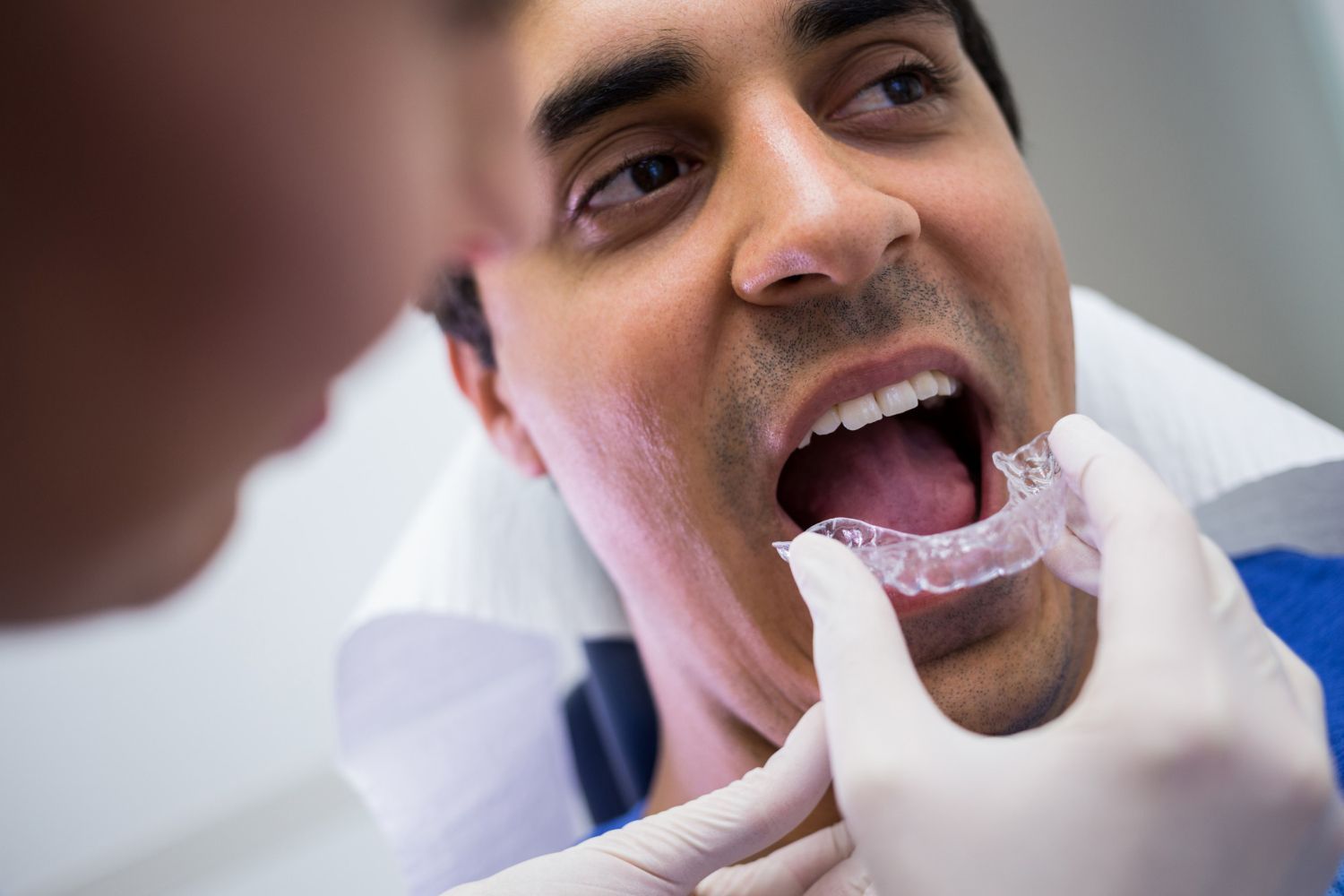
Clear aligners are transparent, removable trays custom-made to guide teeth through a planned sequence of movements. Each set applies gentle pressure to selected teeth before being replaced with the next tray in the series.
At InStyle Dental, patients considering removable orthodontic treatment can explore Invisalign treatment in New York.
What Can Clear Aligners Treat?
Depending on the individual case, clear aligners may help manage:
- Mild to moderate crowding
- Crooked or rotated teeth
- Spaces between teeth
- Certain overbites
- Certain underbites
- Some crossbites
- Some open bites
They are not automatically appropriate for every bite or tooth movement. A clinical examination is necessary before determining suitability.
Benefits of Clear Aligners
Clear aligners are popular because they are:
- Less noticeable than metal braces
- Removable for eating
- Removable for brushing and flossing
- Custom-made for the patient's teeth
- Suitable for many common alignment problems
The removable design can make eating and oral hygiene easier, but it also means treatment depends heavily on patient cooperation.
Limitations of Clear Aligners
Aligners may not be the best choice when:
- Tooth movement is especially complex
- Significant bite correction is required
- Gum or bone health is poor
- The patient cannot wear the trays consistently
- Another orthodontic approach would produce a more predictable result
The American Association of Orthodontists notes that aligners treat a narrower range of cases than braces, and some complex problems may be better managed with fixed appliances.
2. Invisalign for Crooked Teeth
People often use "clear aligners" and "Invisalign" interchangeably, but Invisalign is a specific clear-aligner system.
For appropriate candidates, Invisalign can gradually reposition crooked or crowded teeth without traditional brackets and wires.
A typical treatment process involves:
- Examining the teeth, gums, and bite
- Taking digital records and necessary imaging
- Creating a treatment plan
- Producing a series of customized aligners
- Wearing each aligner as directed
- Attending progress visits
- Wearing retainers after active treatment
Patients who want to understand potential fees can also review Invisalign cost in NYC.
Treatment duration varies according to the amount and type of movement required, patient cooperation, and whether refinements are necessary.
3. Dental Veneers
Veneers can make some mildly crooked or uneven teeth look straighter, but they do not orthodontically move the teeth.
A veneer is a thin restoration placed over the visible front surface of a tooth. It can change the apparent:
- Shape
- Width
- Length
- Color
- Proportion
- Minor visual alignment
For someone with relatively healthy teeth and a primarily cosmetic concern, dental veneers in New York may be one option to discuss.
Veneers vs. Clear Aligners
This distinction is important:
Clear aligners move teeth.
Veneers change how teeth look.
If the underlying bite or tooth position needs correction, simply covering a crooked tooth may not address the functional problem.
Veneers also involve altering the tooth surface in many cases, making them fundamentally different from orthodontic treatment.
4. Dental Bonding
Cosmetic bonding can sometimes improve the appearance of small irregularities.
Tooth-colored composite resin may be added to selected areas of a tooth to make:
- Small gaps appear closed
- Uneven edges appear more symmetrical
- Mildly rotated teeth appear straighter
- Chipped teeth look more uniform
Bonding does not actually reposition the roots or correct a significant bite problem.
For that reason, it may be appropriate for limited cosmetic concerns rather than patients asking how to make significantly crooked teeth straight.
A cosmetic dentistry consultation in NYC can help determine whether bonding, veneers, orthodontics, or another approach is more appropriate.
5. Dental Crowns
Crowns are generally restorative rather than orthodontic treatments.
A crown covers most of the visible portion of a prepared tooth and may be recommended when a tooth is:
- Heavily restored
- Severely worn
- Cracked
- Structurally weakened
- Misshapen
In selected circumstances, a crown can improve the appearance of tooth alignment. However, preparing healthy teeth for crowns solely to make them look straighter may be unnecessarily invasive when orthodontic movement is possible.
Patients who already have damaged or heavily restored teeth can learn about dental crowns in New York.
6. Limited Orthodontic Treatment
Some patients have a specific alignment concern involving only part of the smile.
For example:
- One rotated front tooth
- A small space between front teeth
- Mild crowding
- Relapse after previous orthodontic treatment
In some cases, a dentist or orthodontist may recommend limited orthodontic treatment rather than comprehensive correction.
However, simply straightening the visible front teeth without evaluating the entire bite can create problems. Orthodontic tooth movement affects roots, bone, gum tissues, and how the upper and lower teeth meet. The AAO emphasizes that proper diagnosis—including in-person examination and appropriate imaging—is important before moving teeth.
7. Retreatment After Teeth Have Shifted
Teeth can shift after previous orthodontic treatment, particularly if retainers are not worn as recommended.
Minor relapse may sometimes be treated with:
- New clear aligners
- Limited orthodontic correction
- Replacement retainers after alignment is restored
A retainer itself generally maintains tooth position rather than actively correcting substantial crowding.
If your teeth have changed position over time, the first step is determining why they shifted and whether your gums and bone remain healthy enough for additional orthodontic treatment.
How Do You Get Straight Teeth Without Braces?
A useful way to think about treatment is to separate true tooth movement from cosmetic camouflage.
OptionMoves teeth?Best suited forClear aligners / InvisalignYesMany mild to moderate alignment and bite problemsVeneersNoCosmetic shape, proportion, color, and selected minor alignment concernsBondingNoSmall gaps, chips, or minor visual irregularitiesCrownsNoDamaged or heavily restored teeth requiring full coverageRetainersUsually noMaintaining corrected tooth positionTraditional bracesYesBroad range of simple through complex orthodontic problems
If your goal is genuinely straighter tooth position, orthodontic treatment—whether aligners or braces—is generally more appropriate than covering healthy crooked teeth with restorations.
How Can You Fix Crooked Teeth Without Braces?
The process should begin with diagnosis.
Crooked teeth can result from several factors, including:
- Genetics
- Lack of space in the jaw
- Early or delayed tooth loss
- Tooth-size differences
- Oral habits during development
- Previous orthodontic relapse
- Changes in tooth position over time
A dentist should evaluate whether the problem is primarily dental alignment, bite-related, cosmetic, or a combination.
Patients experiencing crowding or rotation can review crooked teeth treatment in New York.
What Happens During an Evaluation?
Before recommending how to fix teeth without braces, the clinician may evaluate:
- Tooth alignment
- Spacing and crowding
- Upper and lower bite relationship
- Gum health
- Tooth mobility
- Existing crowns and fillings
- Jaw relationship
- Tooth roots and supporting bone
- Previous orthodontic history
Photographs, digital scans, and dental X-rays may be used as part of treatment planning.
This is especially important because moving teeth when periodontal health is poor can increase the risk of complications. The AAO specifically notes that gum and root health need appropriate in-person assessment before orthodontic movement.
A comprehensive general dentistry evaluation can provide the starting point.
Who May Be a Good Candidate for Clear Aligners?
You may be considered for aligner treatment when:
- Your teeth and gums are healthy enough for orthodontic movement
- Your alignment problem can be predictably corrected with aligners
- You are prepared to wear the trays consistently
- You can maintain good oral hygiene
- You attend recommended monitoring appointments
Clear aligners are not automatically better than braces. They are simply a different orthodontic tool.
The best treatment is the one capable of producing the required tooth and bite movements safely and predictably.
When Clear Aligners May Not Be Enough
Some patients searching how do I straighten my teeth without braces may discover that braces are actually the safer or more predictable option.
This can happen with:
- Severe crowding
- Complex tooth rotations
- Significant bite discrepancies
- Difficult root movements
- Impacted teeth
- Certain skeletal jaw problems
- Cases requiring highly controlled tooth movement
Braces can treat a wide range of malocclusions because the orthodontist has continuous control over attached brackets and wires.
Choosing treatment based only on appearance can therefore be a mistake.
Invisalign vs. Braces: Which Is Better?
Neither is universally better.
Clear Aligners May Be Better When You Value:
- Discreet appearance
- Removability
- Easier brushing and flossing
- Fewer food restrictions
Braces May Be Better When You Need:
- Complex tooth movement
- Significant bite correction
- Continuous appliance wear
- Less dependence on patient compliance
Your diagnosis determines which advantages actually matter in your case.
How Long Does It Take to Straighten Teeth Without Braces?
There is no single treatment timeline.
Clear-aligner treatment depends on:
- Amount of crowding
- Number of teeth requiring movement
- Type of movement
- Bite correction required
- Patient age and biology
- Daily wear
- Need for refinements
- Treatment compliance
Some limited cases require fewer movements, while comprehensive orthodontic treatment can take considerably longer.
Be cautious of websites or advertisements promising a guaranteed treatment time without examining your teeth.
How Much Does It Cost to Straighten Teeth Without Braces?
Cost depends on the treatment selected.
Factors may include:
- Complexity of the alignment problem
- Number of aligners required
- Length of treatment
- Whether refinements are needed
- Diagnostic records
- Retainers
- Additional dental treatment before orthodontics
- Insurance coverage
A cosmetic solution such as bonding may cost very differently from comprehensive Invisalign treatment.
Patients considering clear aligners can review current information about Invisalign cost in NYC and the practice's dental insurance options.
Can You Straighten Your Teeth Naturally at Home?
There is no safe, proven home technique for intentionally moving teeth into proper alignment without a professionally supervised orthodontic appliance.
Do not attempt to move teeth using:
- Rubber bands
- String
- Homemade appliances
- Pressure from fingers
- Unsupervised devices
- DIY modifications to retainers
Orthodontic tooth movement affects the supporting bone, roots, and periodontal tissues. Incorrect forces can damage teeth or supporting structures.
The ADA recommends that removable aligner treatment be performed under the direct supervision of a dentist or orthodontist.
Should You Choose Aligners or Cosmetic Dentistry?
Ask yourself what you actually want to change.
If your teeth are healthy but physically crooked, orthodontic treatment may preserve more natural tooth structure because it moves the existing teeth rather than reshaping them.
If alignment is relatively minor but the teeth also have:
- Significant discoloration
- Chips
- Irregular shape
- Existing restorations
- Enamel defects
a cosmetic treatment plan may address several concerns simultaneously.
Sometimes orthodontics is performed first and cosmetic treatment afterward.
Patients interested in smile-focused options can explore cosmetic dentistry in New York City.
Why Retainers Matter After Straightening
Getting teeth straight is only part of the process.
Teeth have a tendency to shift after orthodontic treatment. Retainers help maintain the new positions while the surrounding tissues adapt.
Retention instructions vary, so follow the schedule recommended by your dental or orthodontic provider.
Failing to wear retainers as directed can allow crowding or spacing to return and may lead to additional treatment.
Frequently Asked Questions
How to straighten teeth without braces?
Clear aligners such as Invisalign are the main method used to physically straighten many crooked teeth without traditional metal braces. Veneers and bonding can make selected teeth look straighter but do not orthodontically reposition them.
How do you make your teeth straight without braces?
A dentist can evaluate whether clear aligners can safely move your teeth. If the concern is primarily cosmetic and very minor, veneers or bonding may sometimes improve appearance instead.
How to get straight teeth without braces if they are very crooked?
More severe crowding or complex bite problems may not be ideal for clear aligners alone. Braces or combined orthodontic approaches may provide better control. An examination is necessary before choosing treatment.
How can you fix crooked teeth without braces as an adult?
Adults may be candidates for clear aligners, depending on tooth position, bite complexity, gum health, and supporting bone. Age alone does not prevent orthodontic treatment.
How do I straighten my teeth without braces at home?
There is no recommended DIY method for safely moving teeth. Professionally supervised clear aligners are a removable alternative to braces, while home-made appliances or unsupervised tooth-moving techniques can create unnecessary risk.
Conclusion
If you're researching how to straighten teeth without braces, clear aligners are the primary orthodontic alternative for many patients. Invisalign can physically reposition teeth, while treatments such as veneers, bonding, and crowns primarily change appearance rather than correct tooth position.
The best option depends on the severity of crowding, your bite, gum and bone health, existing dental work, and your treatment goals. An in-person examination is the safest way to determine whether aligners, braces, cosmetic dentistry, or a combination will provide the most appropriate result.
Schedule a Crooked Teeth and Invisalign Consultation in NYC
If you want straighter teeth without traditional braces, InStyle Dental can evaluate your alignment, bite, oral health, and treatment goals before recommending an appropriate approach.
Schedule an Invisalign and crooked teeth consultation in New York City to discuss clear aligners and other treatment options.