What Is a Dental Bone Graft? How It Works and Why It Is Used
What Is a Dental Bone Graft? How It Works and Why It Is Used
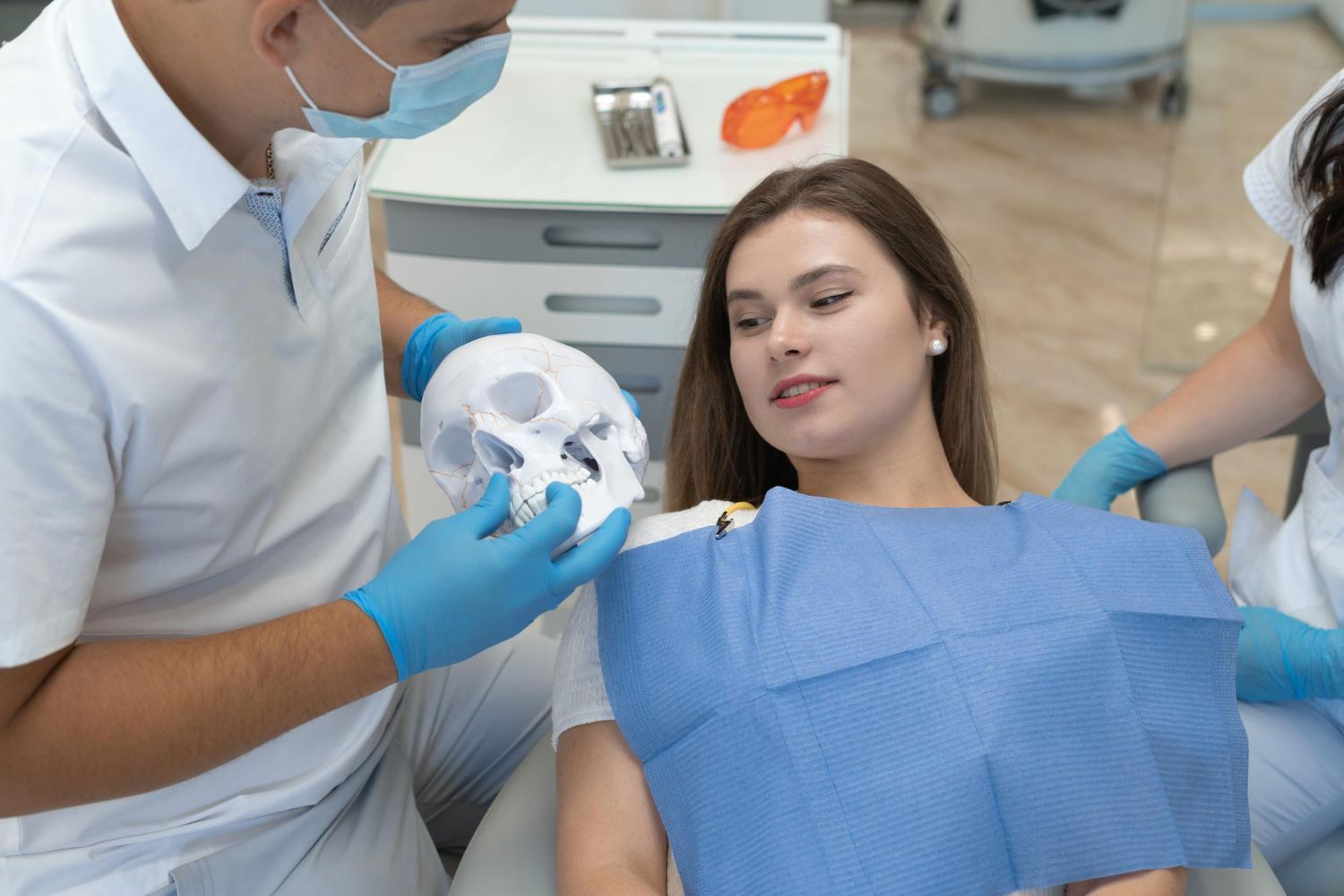
If your dentist has recommended bone grafting, you may be wondering what is a bone graft for teeth and why it is necessary.
A dental bone graft is a procedure used to rebuild or preserve bone in the jaw. It is commonly recommended when bone has been lost after a tooth extraction, gum disease, long-term tooth loss, trauma, or when there is not enough healthy jawbone to support a dental implant. The graft material acts as a framework that allows new bone to develop as the area heals.
At InStyle Dental, dental bone grafting in New York City may be used to restore bone volume and prepare selected patients for future implant treatment.
What Is a Bone Graft for Teeth?
A dental bone graft adds bone or bone-like material to an area of the jaw where the existing bone is too thin, too narrow, damaged, or has started to shrink.
The purpose is not simply to "fill a hole." The graft provides a structure around which the patient's own bone can heal and regenerate.
The American Association of Oral and Maxillofacial Surgeons explains that graft material may come from the patient, a human or animal donor, or a manufactured synthetic material. Depending on the procedure, the graft may directly replace missing bone or act as a scaffold for new bone growth.
In practical terms, bone grafting can help:
- Preserve bone after a tooth is removed
- Rebuild areas where jawbone has already been lost
- Create sufficient bone for dental implant placement
- Restore the shape and volume of the jaw
- Support future restorative dental treatment
Patients who are considering replacing a missing tooth can also review dental implants in New York to understand why adequate bone is important for implant stability. InStyle Dental notes that bone grafting may be planned before implant surgery when the jaw does not have sufficient density.
Why Would You Need a Dental Bone Graft?
A dentist or oral surgeon may recommend a bone graft when the amount or quality of bone in a particular area is not adequate for the treatment being planned.
Several situations can lead to this.
Bone Loss After a Missing Tooth
Natural teeth help stimulate the surrounding jawbone.
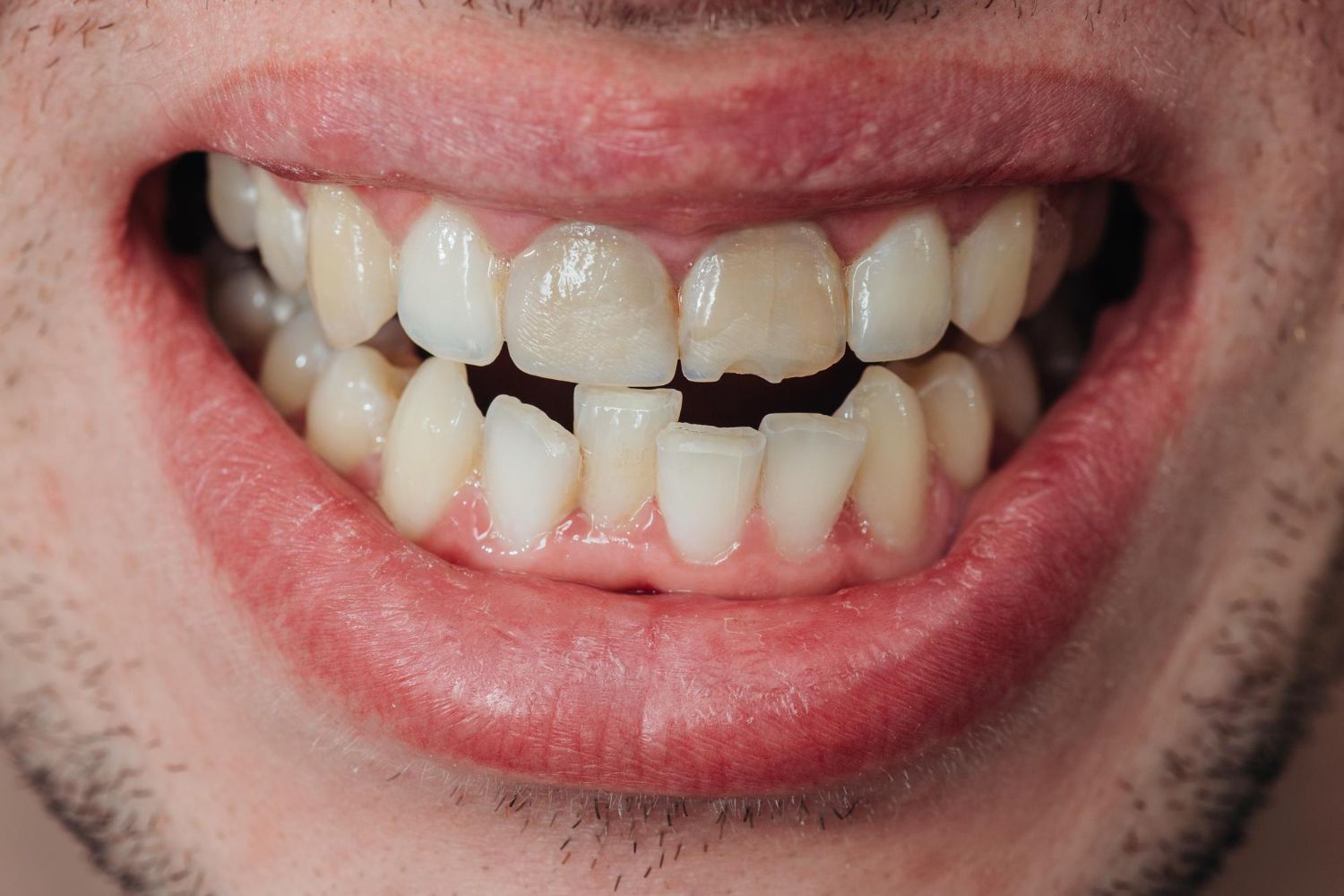
When a tooth is lost, the bone that previously supported the tooth no longer receives the same stimulation. Over time, that area may lose volume.
AAOMS notes that after tooth loss or extraction, the surrounding jawbone can undergo resorption or shrinkage. Preserving the bone may make future treatments such as implants easier to plan.
This is one reason a dentist may discuss bone preservation at the time of a tooth extraction in New York City.
Preparing for a Dental Implant
Dental implants are placed into the jawbone and rely on that bone for support.
If diagnostic imaging shows that the jaw is too thin or has insufficient bone volume, placing an implant immediately may not be the best option.
A bone graft can sometimes rebuild the site first so that there is a more appropriate foundation for future implant placement.
This answers another common question: what is bone grafting for teeth when implants are involved?
It is essentially a preparatory procedure designed to improve the amount of bone available where an implant may eventually be placed.
Patients considering implant treatment can discuss both grafting and implant planning through InStyle Dental's oral surgery services in New York City.
Bone Loss From Periodontal Disease
Advanced periodontal disease can damage the structures that support the teeth, including the surrounding bone.
Depending on the pattern and severity of bone loss, periodontal or surgical treatment may be necessary before restorative treatment can move forward.
Bone grafting is not automatically appropriate for every periodontal case. A dentist must first evaluate the gums, bone levels, tooth stability, and overall oral health.
Bone Loss in the Upper Back Jaw
The upper back portion of the jaw can present a particular challenge when dental implants are planned because the maxillary sinus sits above the upper teeth.
When there is insufficient bone height beneath the sinus, a sinus augmentation, commonly called a sinus lift, may be considered.
AAOMS describes sinus augmentation as a procedure in which bone is added between the jaw and maxillary sinus to increase the available bone for implant placement.
InStyle Dental provides sinus lift treatment in New York for appropriate implant cases.
How Does a Dental Bone Graft Work?
If you are asking how does a dental bone graft work, the simplest explanation is that the graft material creates an environment where new bone can form.
The exact procedure varies depending on:
- Where bone is missing
- How much bone needs to be restored
- Whether a tooth is being extracted
- Whether an implant is being planned
- The type of graft material
- The patient's overall health and healing capacity
Step 1: Dental Examination and Imaging
Before treatment, the dentist or oral surgeon evaluates the area.
This may involve:
- A clinical examination
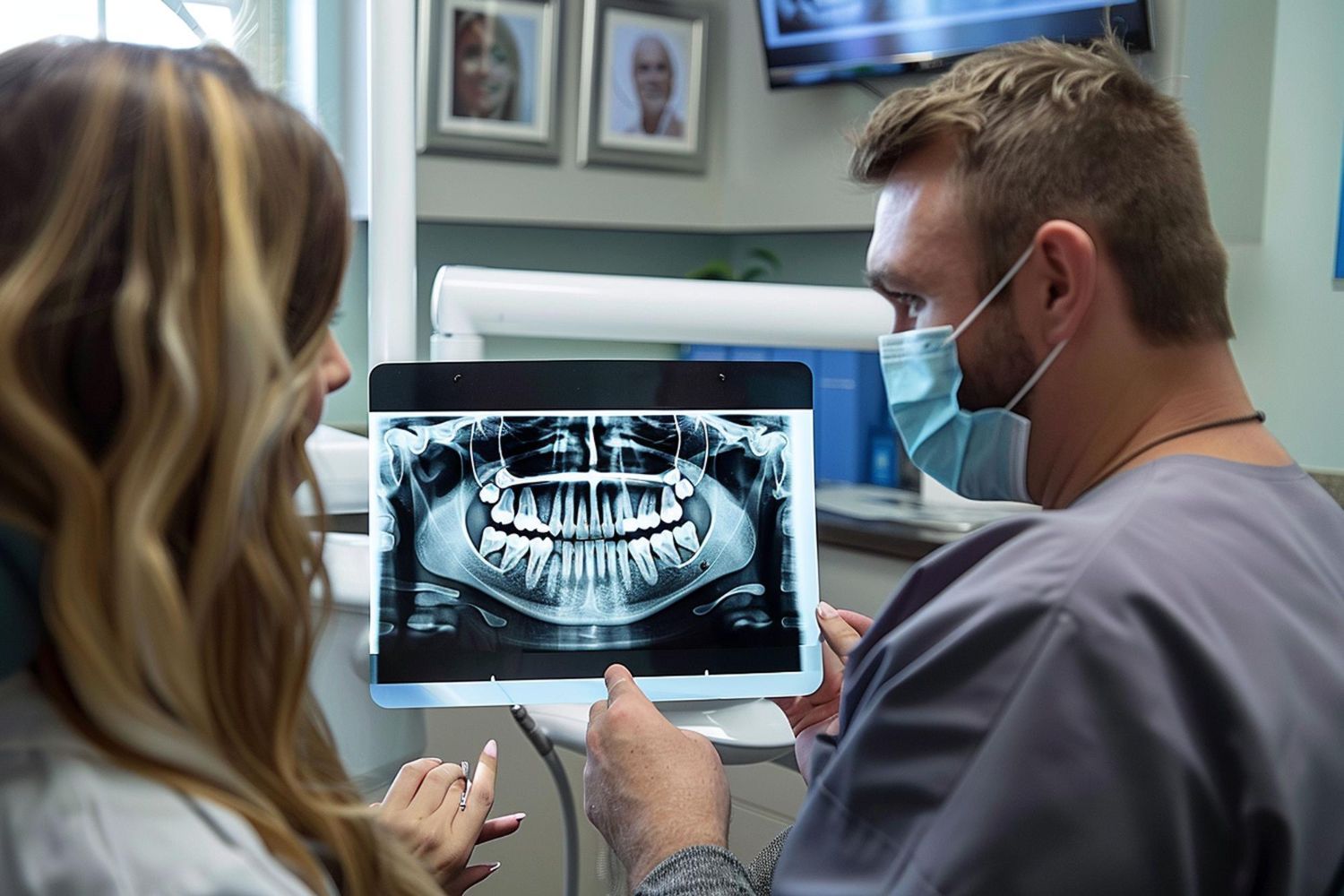
- Dental X-rays
- Three-dimensional imaging when appropriate
- Assessment of existing bone height and width
- Review of gum health
- Review of medical history and medications
The goal is to determine whether grafting is necessary and how much additional bone may be required.
Step 2: The Area Is Prepared
During the procedure, local anesthesia is typically used to numb the treatment area.
The surgeon then prepares the site where the graft will be placed.
If grafting is performed immediately after an extraction, the graft material may be placed into or around the empty tooth socket.
For larger defects, the procedure can be more involved.
Step 3: Bone Graft Material Is Placed
The selected graft material is positioned in the area where additional bone is needed.
Depending on the case, the graft may be covered with a membrane.
Membranes can help protect the grafted area and guide healing by limiting unwanted soft tissue from entering the space where bone regeneration is intended. AAOMS notes that membranes used in bone grafting may be resorbable or nonresorbable.
Step 4: The Area Heals
After placement, the graft does not instantly become mature jawbone.
Healing occurs gradually.
Over time, the patient's body forms new bone around and through the grafted area. The graft material may become incorporated, remodeled, or replaced by newly formed bone depending on the material and technique used.
Healing time varies considerably, so patients should follow the timeline provided by their treating dentist or surgeon rather than assuming that every bone graft heals at the same rate.
How Do Dental Bone Grafts Work With Dental Implants?
A common reason patients ask how do dental bone grafts work is because they have been told they need one before receiving an implant.
Dental implants require a stable quantity and quality of bone around the implant fixture.
If the bone is inadequate, there may not be enough support for predictable placement.
The usual sequence in a staged case may look like this:
- The deficient area of the jaw is evaluated.
- Bone graft material is placed.
- The grafted site is allowed to heal.
- The new bone volume is reassessed.
- A dental implant is placed when the area is considered suitable.
- The implant then undergoes osseointegration, during which bone forms around the implant.
The American Dental Association describes osseointegration as the process in which bone grows around an implant and holds it in place.
Not every implant patient needs a separate bone graft. In some situations, minor grafting may be completed at the same time as implant placement. In others, substantial bone loss may require a separate grafting procedure followed by a healing period.
That decision should be based on imaging and an individualized surgical assessment rather than a standard timetable.
Patients who have several missing or damaged teeth may also benefit from an evaluation through restorative dentistry in New York City, where implant and other tooth-replacement options can be considered together.
What Is a Bone Graft for a Tooth After Extraction?
A bone graft after extraction is often referred to as socket preservation or ridge preservation.
After a tooth is removed, a space remains in the jawbone where the tooth root used to be.
Without intervention, natural remodeling can cause that ridge to become smaller over time.
A graft may therefore be placed into the extraction site to help preserve the shape and volume of the ridge.
This can be particularly useful when:
- A dental implant may be placed later
- Maintaining ridge dimensions is important
- The tooth has been missing because of infection or damage
- Significant bone loss is already present
However, not every extraction automatically requires a graft.
The decision depends on the condition of the socket, future treatment plans, location of the tooth, remaining bone, and other clinical factors.
If an extraction is being considered, the dentist can evaluate whether socket preservation should be incorporated into the tooth extraction treatment plan.
What Types of Dental Bone Graft Material Are Used?
Another part of understanding what is bone grafting in teeth is knowing that not every graft uses the same material.
Several categories may be used.
Autograft
An autograft uses bone taken from another area of the patient's own body.
In oral surgery, donor bone may sometimes be taken from another area of the jaw or, in more extensive procedures, from another donor site.
Allograft
An allograft uses processed human donor bone obtained from a tissue bank.
This eliminates the need to create a second surgical site simply to harvest bone.
Xenograft
A xenograft comes from another biological source, commonly animal-derived material that has been processed for dental use.
Synthetic Bone Graft
Synthetic grafts are manufactured materials designed to support bone regeneration.
The appropriate material depends on the defect, surgical technique, treatment goals, medical history, and clinician's recommendation.
NIDCR recognizes bone grafts and membranes as dental materials used to help repair and regenerate bone and soft tissue.
There is no single "best" graft material for every patient.
What Are the Benefits of Dental Bone Grafting?
When clinically appropriate, dental bone grafting may provide several practical benefits.
It Can Preserve the Jaw After Extraction
Socket preservation can help maintain more of the existing ridge architecture after tooth removal.
It Can Make Dental Implants Possible
For patients with insufficient bone, grafting can potentially create the bone volume needed for implant planning.
It Can Rebuild Areas of Bone Loss
Localized bone deficiencies caused by missing teeth, infection, periodontal disease, or trauma may sometimes be reconstructed.
It Can Support Restorative Planning
Maintaining or restoring the ridge can make it easier to plan implants or other replacement options.
For patients with broader restorative needs, InStyle Dental offers comprehensive dental services in New York, including implant, restorative, prosthodontic, and surgical care.
What Are the Limitations and Risks?
Bone grafting is a surgical procedure, and it is important to have realistic expectations.
Possible issues can include:
- Swelling and soreness during early healing
- Bleeding
- Infection
- Graft exposure
- Delayed healing
- Loss or inadequate integration of graft material
- Need for additional treatment
- A longer overall implant-treatment timeline
Smoking and certain medical conditions can also affect healing.
Bone grafting can improve available bone, but it cannot guarantee that every patient will become a candidate for every type of dental implant.
The amount of existing bone, location of the defect, gum condition, systemic health, oral hygiene, and treatment goals all influence the final decision.
Do You Need a Bone Graft Before Getting a Dental Implant?
Not necessarily.
Some patients already have enough healthy jawbone to receive an implant without grafting.
Others may need:
- Minor grafting at implant placement
- Socket preservation after extraction
- A staged ridge augmentation
- A sinus lift
- More extensive reconstruction
Your dentist or oral surgeon uses an examination and diagnostic imaging to determine which category applies to you.
The most useful question is therefore not simply, "Do dental implants require bone grafts?"
It is:
Do I have enough healthy bone in the correct location to support the implant being planned?
That is an individual clinical decision.
What Should You Expect After Dental Bone Grafting?
The soft tissue around the surgical site generally begins healing before the deeper bone has fully matured.
During early recovery, patients may experience temporary:
- Swelling
- Mild bleeding
- Tenderness
- Bruising
- Tightness around the surgical area
Your dentist may recommend a modified diet and specific oral-hygiene instructions while the site heals.
Avoid disturbing the grafted area with fingers, vigorous rinsing, or other unnecessary pressure unless your surgeon specifically instructs otherwise.
The deeper bone-healing process takes longer than the initial gum healing. AAOMS emphasizes that bone-graft healing varies according to the recipient site, donor material, procedure, and patient's health.
Contact your dental team if you experience symptoms that concern you or appear to be worsening rather than improving.
How Do You Know Whether You Need Bone Grafting?
You usually cannot determine this accurately just by looking in the mirror.
A professional evaluation is needed because bone height and width are largely below the gumline.
Bone grafting may be discussed if:
- You have been missing a tooth for a long time
- You recently need a tooth extraction and want a future implant
- Previous periodontal disease has caused bone loss
- You were told there is insufficient bone for an implant
- You need implant treatment in the upper posterior jaw
- Previous implant treatment failed because of bone-related problems
- Imaging shows a narrow or deficient ridge
If you are unsure whether grafting is required, an oral surgery consultation at InStyle Dental can help determine which treatment options are appropriate.
Frequently Asked Questions
What is a bone graft dental procedure used for?
A dental bone graft is used to preserve or rebuild jawbone. It may be recommended after an extraction, after bone loss, before dental implant placement, or as part of procedures such as sinus augmentation.
What is bone graft dental treatment made from?
Dental bone graft material may come from the patient's own bone, processed human donor bone, animal-derived material, or synthetic biomaterials. The choice depends on the type and size of the defect and the treatment plan.
How does a dental bone graft work?
The graft is placed in an area where additional bone is needed and acts as a framework for healing. Over time, new bone forms in and around the grafted area. The exact biological response varies according to the material and procedure.
What is a bone graft for a tooth after extraction?
After extraction, graft material can be placed in the empty socket to help preserve the surrounding ridge. This is often called socket preservation and may be useful when a dental implant is planned for the future.
Does everyone getting dental implants need bone grafting?
No. Patients who already have adequate jawbone may not need a graft. Bone grafting is generally considered when there is insufficient bone volume, density, or anatomy for the implant treatment being planned.
Conclusion
So, what is a bone graft for teeth?
It is a dental surgical procedure used to preserve or rebuild jawbone where bone has been lost or where more bone is needed for future treatment.
Bone grafting is commonly associated with tooth extraction, missing teeth, periodontal bone loss, sinus augmentation, and preparation for dental implants. The graft material provides a framework for new bone development, but the technique, material, and healing period vary from patient to patient.
Most importantly, not everyone who loses a tooth or receives an implant needs bone grafting. The decision should be based on a clinical examination, dental imaging, existing bone volume, and your long-term treatment plan.
If you have been told that you have jawbone loss or may need grafting before an implant, contact InStyle Dental to schedule a bone grafting consultation in New York City. The team can assess your bone levels, explain your options, and determine whether bone grafting is appropriate for your treatment plan.