Can a Crestal Sinus Lift and Dental Implant Be Done at the Same Appointment?
Can a Crestal Sinus Lift and Dental Implant Be Done at the Same Appointment?
Yes, a crestal sinus lift and implant same day procedure is possible for suitable patients. A dentist may perform the sinus lift and place the dental implant during a single surgical appointment when there is enough existing jawbone to support the implant securely.
This approach is called simultaneous sinus augmentation and implant placement.
However, not everyone qualifies. The decision depends on factors such as residual bone height, sinus anatomy, bone quality, and implant stability.
For patients missing upper back teeth, a combined procedure may reduce the need for separate surgeries and shorten the overall treatment process.
At InStyle Dental in Midtown Manhattan, NYC, patients can explore intra-crestal sinus lift treatment as part of an individualized implant treatment plan.
What Is a Crestal Sinus Lift?
A crestal sinus lift is a surgical technique that increases available bone height beneath the maxillary sinus to support dental implant placement. The procedure uses an opening prepared through the jawbone ridge to gently elevate the sinus floor, creating additional space where bone regeneration can occur.
The procedure is most commonly considered when replacing missing premolars or molars in the upper jaw, known as the posterior maxilla.
After tooth loss, the jawbone can gradually shrink. The sinus cavity may also expand into the area previously occupied by bone, leaving less vertical space for an implant.
A crestal sinus lift helps address this limitation.
Unlike the traditional lateral window approach, the crestal technique accesses the sinus floor through the planned implant site.
It may be suitable when only a limited amount of additional bone height is required.
Can a Crestal Sinus Lift and Implant Be Done on the Same Day?
Yes, a sinus lift and implant can be completed during the same surgical appointment when the remaining jawbone provides adequate support for initial implant stability. This approach avoids a separate implant-placement surgery, but it requires careful imaging, appropriate sinus anatomy, and a favorable assessment of bone quality.
A dentist may recommend simultaneous placement when:
- The existing bone can stabilize the implant.
- Only a modest amount of sinus floor elevation is required.
- The sinus anatomy is suitable for a crestal approach.
- The implant can be positioned correctly for the final restoration.
- There is no untreated condition that would compromise surgery or healing.
For example, a patient missing an upper molar may have enough existing bone for the implant to achieve primary stability but not enough vertical height for the planned implant without sinus floor elevation.
In this situation, a crestal lift with implant placement may be considered.
However, if the bone is too thin or the implant cannot be stabilized adequately, the dentist may recommend a staged treatment instead.
Patients considering dental implants in NYC should have their anatomy evaluated before choosing between simultaneous and delayed placement.
How Much Bone Is Needed for a Crestal Sinus Lift and Implant?
There is no single residual bone height measurement that guarantees eligibility for simultaneous sinus elevation and implant placement. Many clinicians consider crestal approaches when approximately 5–6 mm or more of existing bone is available, but appropriate treatment depends on bone quality, implant design, sinus anatomy, and primary stability.
Residual bone height refers to the vertical distance between the top of the jawbone ridge and the floor of the maxillary sinus.
It is one of the most important measurements in implant planning.
A 2026 expert consensus survey reported that clinicians most frequently selected 5 mm as the minimum residual bone height for crestal sinus elevation with simultaneous implant placement. However, recommendations varied considerably.
This means that 5 mm is a commonly discussed clinical benchmark, not a universal requirement or guarantee of success.
Other factors matter just as much:
- Bone quality: Whether the existing bone can securely hold the implant.
- Ridge width: Whether there is enough horizontal bone for placement.
- Sinus anatomy: The position of the sinus membrane and nearby structures.
- Primary stability: The mechanical stability achieved when the implant is inserted.
- Restorative position: Whether the implant can appropriately support the planned crown.
A cone-beam computed tomography scan, or CBCT, can help assess these conditions in three dimensions.
How Is a Crestal Sinus Lift With Implant Placement Performed?
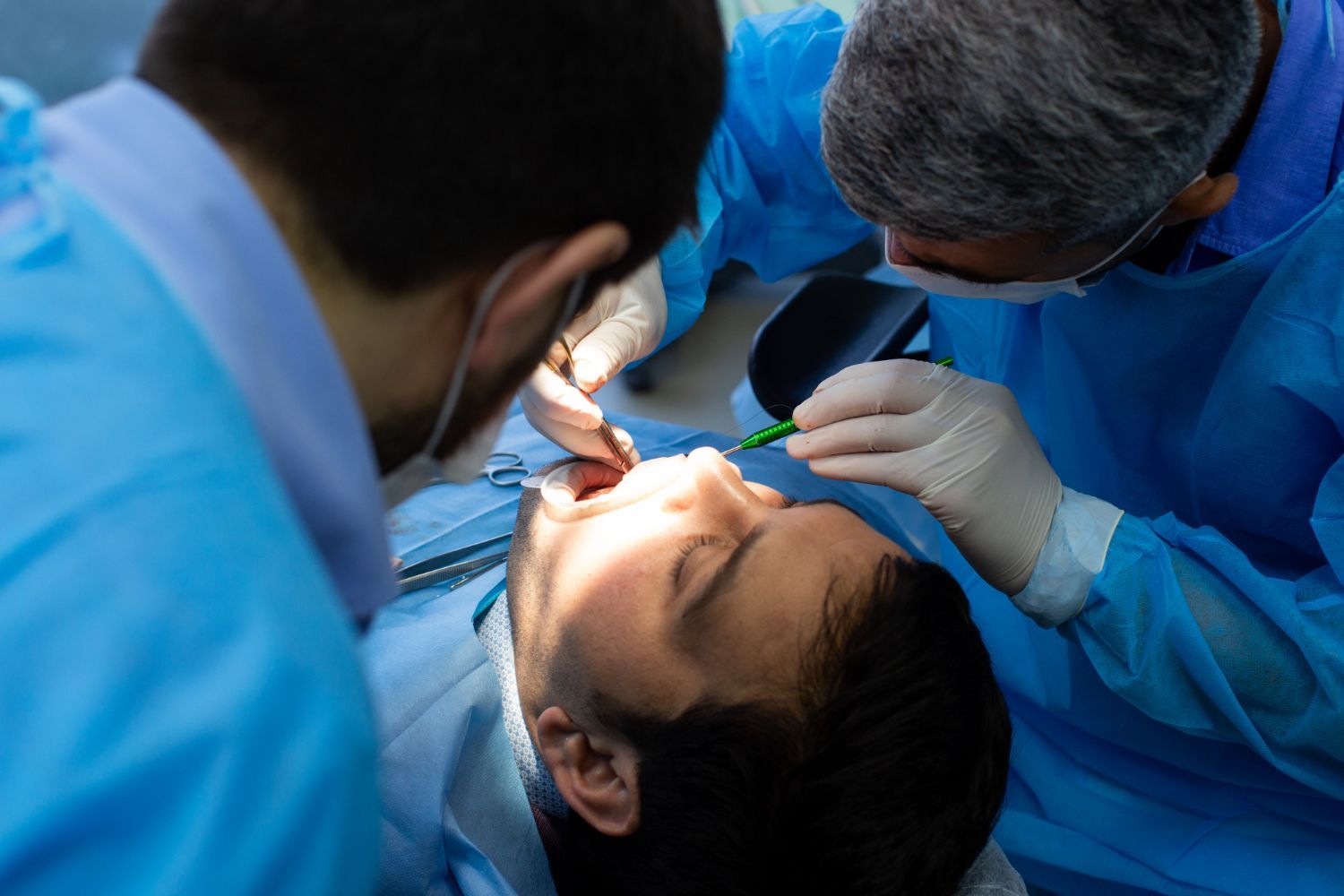
A crestal sinus lift with simultaneous implant placement involves preparing an implant site, carefully elevating the sinus floor, and inserting the implant during the same surgical session. The exact technique varies according to the available bone, instruments, and treatment plan, with particular attention to protecting the sinus membrane.
The procedure generally follows five steps.
Step 1: Examination and CBCT Imaging
The dentist examines the gums, missing-tooth area, bite, and medical history.
A CBCT scan may be used to evaluate residual bone height, ridge anatomy, and the maxillary sinus before surgery.
Step 2: Preparing the Implant Site
After appropriate local anesthesia, the clinician creates an opening in the jawbone at the planned implant position.
The preparation approaches the sinus floor without intentionally opening the sinus cavity.
Step 3: Elevating the Sinus Floor
Specialized instruments are used to carefully elevate the sinus floor and its lining.
Depending on the technique and clinical findings, graft material may be placed beneath the elevated membrane to support bone regeneration.
Step 4: Placing the Dental Implant
If adequate primary stability can be achieved, the implant is inserted during the same appointment.
If conditions are unsuitable, the clinician may modify or postpone implant placement.
Step 5: Healing and Final Restoration
The implant is allowed to integrate with the surrounding bone before the final restoration is attached.
This process is called osseointegration.
Patients considering related procedures can review the available oral surgery services to better understand surgical dental treatment options.
What Are the Benefits of Same-Appointment Sinus Lift and Implant Placement?
Combining a crestal sinus lift and implant placement may reduce the number of surgical appointments and avoid a separate implant-placement procedure. For carefully selected patients, it can simplify the treatment sequence and potentially shorten the overall timeline while still allowing time for normal bone healing.
Potential advantages include:
- One surgical appointment: Both procedures may be completed together.
- Fewer separate surgical visits: Patients may avoid returning for another implant surgery.
- Shorter treatment sequence: A separate healing period before implant insertion may not be necessary.
- Less extensive access: The crestal approach generally uses the planned implant site rather than a separate lateral bone window.
These benefits depend on the clinical situation.
A simultaneous procedure is not automatically safer, more comfortable, or more successful for every patient.
When Is a Staged Sinus Lift the Better Option?
A staged sinus lift may be preferable when there is insufficient existing bone to stabilize the implant, substantial augmentation is required, or sinus anatomy presents additional surgical challenges. In these situations, the dentist performs sinus augmentation first, allows the area to heal, and places the implant later.
The two treatment approaches differ mainly in timing.
Simultaneous treatment
- Sinus floor elevation and implant placement occur together.
- Requires adequate initial implant stability.
- May reduce the number of separate surgical visits.
- Still requires healing before the final restoration.
Staged treatment
- Sinus augmentation is performed first.
- Grafted bone is given time to heal or mature.
- The implant is placed during a later appointment.
- May be appropriate for more significant bone deficiencies.
A staged approach may require several additional months, depending on healing and the amount of augmentation.
For patients needing more extensive bone reconstruction, bone grafting in New York may form part of the recommended treatment plan.
The best option is the one that provides a suitable foundation for long-term function, not simply the fastest procedure.
What Are the Risks of Simultaneous Sinus Augmentation and Implant Placement?
Simultaneous sinus augmentation and implant placement carries risks associated with both sinus surgery and dental implant treatment. These include sinus membrane perforation, infection, bleeding, graft-related complications, and inadequate implant stability. Appropriate patient selection, imaging, surgical technique, and postoperative care help manage these risks but cannot eliminate them.
One important concern is perforation of the Schneiderian membrane, the thin lining of the maxillary sinus.
A perforation does not always mean treatment will fail, but it may require the clinician to change the surgical approach.
Other considerations include:
- Postoperative swelling or discomfort
- Sinus symptoms or infection
- Poor healing around the grafted area
- Implant failure or lack of osseointegration
- Additional treatment if complications occur
Patients should also inform their dentist about chronic sinus problems, smoking, relevant medical conditions, and medications that could affect healing.
How Long Does Recovery Take After a Same-Day Sinus Lift and Implant?
Initial recovery after a combined crestal sinus lift and implant procedure generally involves several days of tenderness, swelling, or mild discomfort, while deeper bone healing takes considerably longer. The implant commonly requires several months to integrate before the final crown can be fitted, depending on individual healing.
Recovery instructions may include:
- Avoiding forceful nose blowing until cleared by the clinician
- Sneezing with the mouth open
- Avoiding smoking and strenuous activity during the advised recovery period
- Taking prescribed medications as directed
- Eating softer foods initially
- Attending scheduled follow-up appointments
Healing varies, and the dentist may provide additional sinus precautions based on the surgical technique.
Same-day implant placement does not necessarily mean same-day teeth.
Even when the sinus lift and implant are completed together, the permanent crown is generally placed after sufficient integration and stability have been confirmed.
How Much Does a Same-Day Crestal Sinus Lift and Implant Cost?
The cost of a combined crestal sinus lift and dental implant depends on the complexity of the procedure, available bone, grafting requirements, implant components, and final restoration. A combined appointment may reduce the number of surgeries, but it does not necessarily make treatment less expensive overall.
A personalized estimate may include diagnostic imaging, sinus augmentation, graft material when necessary, implant placement, and the final crown.
Patients can review factors influencing dental implant costs in NYC before discussing their treatment estimate.
Frequently Asked Questions
1. Is a Crestal Sinus Lift and Implant Same Day Procedure Safe?
A same-day crestal sinus lift and implant procedure can be a reasonable treatment option for appropriately selected patients. Safety depends on the amount and quality of available bone, sinus anatomy, medical history, surgical technique, and ability to achieve implant stability. Complications remain possible even with careful planning.
2. Can a Sinus Lift and Implant Be Done Together With Only 4 mm of Bone?
Simultaneous sinus elevation and implant placement may be possible in selected cases with approximately 4 mm of residual bone, but this is not a universally accepted threshold. Reduced bone height can make initial stability more difficult, and some patients may benefit from a staged approach instead.
3. Is Bone Graft Material Always Required During an Internal Sinus Lift?
Bone graft material is not used in every internal sinus lift procedure. Some techniques rely on the elevated sinus membrane and blood clot to support healing, while others use graft material to provide additional support. The choice depends on the required elevation, available bone, and surgical plan.
4. Can I Get a Permanent Dental Crown on the Same Day as My Sinus Lift?
A permanent dental crown is generally not placed on the same day as a sinus lift and implant procedure. Although immediate restoration is possible in certain implant situations, combining surgery with sinus augmentation often calls for a more cautious healing approach before the implant is loaded.
5. How Successful Is a Crestal Sinus Lift With Simultaneous Implant Placement?
Crestal sinus lift procedures with simultaneous implant placement can achieve favorable outcomes in appropriately selected patients. However, success varies with residual bone height, implant stability, sinus anatomy, surgical technique, and patient health. Published studies should not be interpreted as guarantees of individual treatment success.
Conclusion
A crestal sinus lift and dental implant can sometimes be completed during the same surgical appointment, making treatment more convenient for suitable patients.
However, the procedure is not appropriate for everyone.
Residual bone height, primary stability, sinus anatomy, and overall oral health determine whether simultaneous implant placement is advisable.
For some patients, a staged sinus lift remains the more predictable option.
The most reliable next step is a professional implant evaluation with appropriate diagnostic imaging.
Explore Your Dental Implant Options at InStyle Dental
At InStyle Dental in Midtown Manhattan, NYC, patients can discuss crestal sinus lift procedures, dental implants, and individualized treatment options for replacing upper back teeth.
If you are considering an implant but have been told you lack sufficient bone, a consultation can help determine whether sinus augmentation may be appropriate.
Schedule Your Dental Implant Consultation to discuss your options and take the next step toward restoring your smile.