Tooth Hurts When Biting Down? 7 Possible Causes
Tooth Hurts When Biting Down? 7 Possible Causes
If your tooth hurts when biting down, the problem may be a cracked tooth, cavity, high filling, gum inflammation, or infection affecting the tooth's nerve or surrounding tissues. Pain when chewing is not always serious, but persistent or worsening discomfort should be evaluated by a dentist.
You might notice a sharp sensation when eating something crunchy, pressure in one particular tooth, or discomfort that disappears as soon as you stop chewing.
Understanding when the pain occurs, how long it lasts, and whether other symptoms are present can help identify the possible cause.
Why Does Your Tooth Hurt When Biting Down?
A tooth can hurt when biting down because chewing places pressure on its enamel, dentin, dental pulp, and supporting tissues. If any of these structures are damaged, inflamed, or infected, normal biting forces may trigger pain. The location and type of discomfort can provide important diagnostic clues.
The periodontal ligament, which connects the tooth root to the surrounding bone, is particularly sensitive to pressure.
For example:
- Sharp pain when biting: May indicate a cracked tooth or damaged restoration.
- Pain when releasing pressure: Can occur with certain tooth cracks.
- Dull tooth pressure pain: May suggest ligament inflammation or excessive biting forces.
- Throbbing pain with swelling: Could indicate a dental abscess.
- Pain after a recent filling: May result from an uneven bite or temporary inflammation.
These symptoms can overlap, so a professional dental examination is necessary to confirm the cause.
7 Possible Causes of Pain When Biting Down
1. Cracked Tooth or Root Fracture
A cracked tooth is a common explanation for sharp, intermittent biting pain. Small cracks can allow tooth segments to move slightly under pressure, irritating the dental pulp. Some cracks extend toward the root, while a vertical root fracture may affect the deeper supporting structures.
Common signs include:
- Sharp pain when chewing hard foods
- Discomfort when releasing biting pressure
- Sensitivity to hot or cold drinks
- Pain that comes and goes unpredictably
Not every crack is visible on a dental X-ray. Dentists may use bite tests, magnification, transillumination, and other diagnostic methods.
Treatment depends on the crack's location and depth. A crown may protect certain damaged teeth, while deeper fractures may require root canal treatment or extraction.
2. High Filling or Uneven Bite
If your tooth hurts chewing shortly after dental treatment, a high filling or crown may be responsible. This happens when a restoration contacts the opposing tooth earlier than surrounding teeth, creating excessive pressure on the treated tooth and irritating its periodontal ligament.
Your bite, also called occlusion, should distribute chewing forces comfortably across your teeth.
Signs of a high filling include:
- Pain when closing your teeth together
- A sensation that one tooth feels taller
- Tenderness after a recent filling or crown
- Discomfort concentrated in the restored tooth
A dentist can check the bite using articulating paper and make adjustments when necessary.
If pain develops after dental fillings in New York, contact your dentist rather than attempting to adjust the filling yourself.
3. Tooth Decay or Cavities
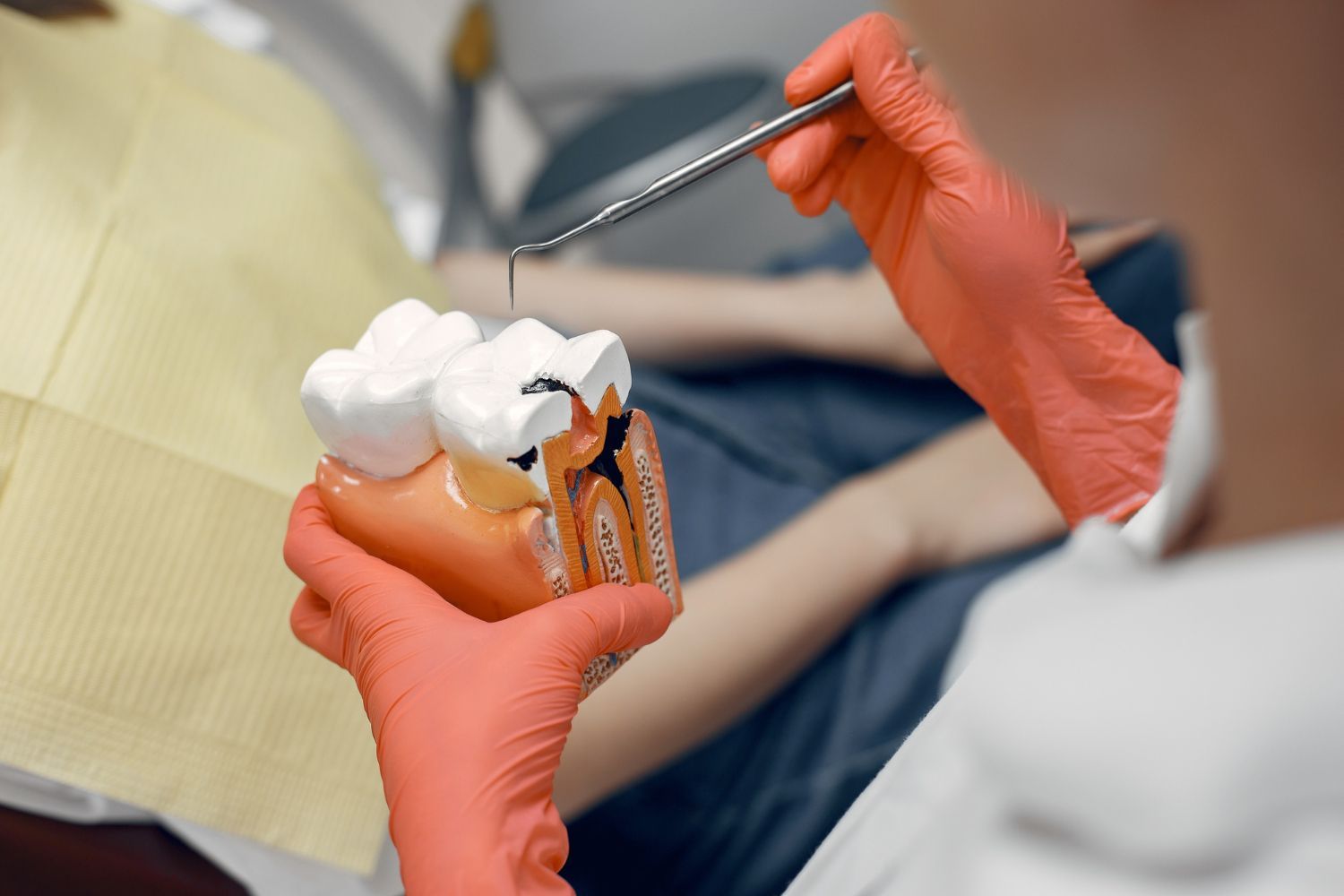
Tooth decay can cause pain when biting if a cavity weakens the tooth structure or allows irritation to reach deeper layers. Early decay may produce no symptoms, but advanced cavities can lead to chewing discomfort, temperature sensitivity, and inflammation of the dental pulp.
You may notice:
- Sensitivity to sweet or cold foods
- Food repeatedly becoming trapped in one area
- A visible hole or darkened spot
- Discomfort when chewing on one side
Treatment depends on the extent of decay. Smaller cavities may require fillings, while extensively damaged teeth may need dental crowns.
Treating decay before it progresses can help preserve more natural tooth structure.
4. Pulpitis or Inflamed Tooth Nerve
Pulpitis occurs when the soft tissue inside a tooth becomes inflamed, often because of deep decay, trauma, or a crack. Biting may worsen discomfort, particularly when inflammation extends into tissues around the root. Lingering temperature sensitivity or spontaneous pain can suggest more extensive pulp damage.
There are two important forms:
- Reversible pulpitis: The pulp may recover once the source of irritation is treated.
- Irreversible pulpitis: The inflammation is too severe for the pulp to heal predictably.
A dentist may assess cold sensitivity, percussion response, and X-rays to determine whether the pulp is healthy.
When a tooth's pulp is irreversibly inflamed or infected, root canal treatment in New York may help preserve the natural tooth.
5. Dental Abscess or Infection
A dental abscess is a localized collection of pus caused by bacterial infection. Infection around a tooth's root can create pressure and inflammation, making the tooth painful when touched or used for chewing. Swelling, a bad taste, fever, or persistent throbbing pain may also occur.
Warning signs include:
- Severe or increasing toothache
- Gum or facial swelling
- Pain when tapping or biting on the tooth
- A pimple-like swelling on the gum
- Fever or feeling generally unwell
Treatment may involve drainage, root canal therapy, periodontal treatment, or extraction, depending on the source.
Antibiotics are not a substitute for treating the infection itself and are not needed for every dental abscess.
Important: Seek urgent dental care for suspected infection. Facial swelling accompanied by difficulty breathing or swallowing requires immediate emergency medical attention.
6. Gum Disease and Periodontal Ligament Inflammation
Gum disease can cause biting discomfort when inflammation affects the tissues supporting a tooth. In more advanced periodontal disease, bone loss and changes in tooth stability may make chewing uncomfortable. Inflammation of the periodontal ligament can also produce tenderness when pressure is applied.
Possible signs include:
- Bleeding or swollen gums
- Persistent bad breath
- Gum recession
- Loose teeth
- Discomfort when chewing
Early gum inflammation may improve with professional care and consistent oral hygiene. Advanced periodontitis may require deeper cleaning, ongoing periodontal maintenance, or additional treatment.
Explore periodontal disease treatment in New York for information about available care.
7. Teeth Grinding or Excessive Bite Pressure
Teeth grinding, also called bruxism, can overload individual teeth and the surrounding periodontal ligament. Repeated clenching may lead to tooth pressure pain, enamel wear, muscle tenderness, and occasional biting discomfort, even when no obvious cavity or fracture is present.
Common signs include:
- Morning jaw soreness
- Headaches around the temples
- Flattened or worn tooth surfaces
- Tenderness across several teeth
- Chewing discomfort after prolonged clenching
Treatment may include a professionally fitted night guard, behavioral changes, and management of contributing factors.
If you frequently wake up with sore teeth or tight jaw muscles, learn about teeth grinding treatment in New York.
How Can You Tell What Is Causing Biting Pain in Your Tooth?
The pattern of biting pain can help narrow down its possible causes, but it cannot establish a diagnosis by itself. Sharp pain, pressure sensitivity, lingering temperature discomfort, and swelling often point toward different dental problems. Dentists combine symptom history with clinical tests and imaging to identify the source.
For example, pain after a new filling may suggest an occlusion problem, while pain when releasing a bite may raise concern about a crack.
A dentist may use the following five-step assessment:
- Review your symptoms: Identify when pain began, which tooth hurts, and what triggers it.
- Examine the tooth: Look for cracks, cavities, damaged restorations, and gum inflammation.
- Test the bite: Check whether excessive pressure or a specific biting movement causes discomfort.
- Evaluate pulp health: Use temperature and other diagnostic tests to assess the tooth's nerve response.
- Review dental imaging: Examine X-rays and consider additional imaging when clinically indicated.
Small cracks are not always detectable on standard X-rays, so a normal image does not completely exclude a fracture.
The American Association of Endodontists' guidance on cracked teeth also explains why chewing pain can be intermittent and why early evaluation matters.
What Should You Do If Your Tooth Hurts When Biting Down?
If your tooth hurts when biting down, avoid placing additional pressure on the affected tooth and arrange a dental examination, especially if the pain persists or returns. Temporary measures may reduce irritation, but they cannot repair a crack, correct an uneven restoration, or eliminate an infection.
Until your appointment:
- Chew on the opposite side of your mouth.
- Choose soft foods such as yogurt, eggs, or soup.
- Avoid ice, hard candy, nuts, and other hard foods.
- Brush gently and clean between your teeth.
- Rinse with warm salt water if your gums feel irritated.
- Consider over-the-counter pain relief according to product directions, if medically suitable for you.
Do not repeatedly bite on the painful tooth to test whether it still hurts.
For recurring pain, professional restorative dentistry may be appropriate when tooth structure has been damaged.
When Should You See a Dentist for Tooth Pain?
You should see a dentist when biting pain is persistent, recurring, worsening, or interfering with eating. Prompt evaluation is especially important after dental trauma or when a tooth feels loose. Swelling, fever, or severe pain may indicate infection and require urgent attention.
Arrange a dental assessment if the discomfort continues beyond a day or two, and sooner if the symptoms are significant.
Early diagnosis may allow simpler treatment, but the outcome depends on the underlying condition and the amount of damage present.
Frequently Asked Questions
1. Why Does My Tooth Hurt When Biting Down but Not Otherwise?
A tooth that hurts only when biting may have a crack, an uneven restoration, or inflammation in its supporting ligament. These problems can remain relatively comfortable at rest but become painful under chewing pressure. A dentist can use bite testing and examination to identify the likely cause.
2. Can Tooth Pressure Pain Go Away on Its Own?
Mild tooth pressure pain can sometimes improve if temporary inflammation settles, particularly after recent dental work. However, pain caused by a cavity, significant crack, or infection generally requires treatment. If symptoms persist, return, or become more severe, arrange a dental examination rather than waiting indefinitely.
3. Why Does My Tooth Hurt When Chewing After a Filling?
A tooth may hurt when chewing after a filling because of temporary pulp sensitivity, a high restoration, or irritation of the periodontal ligament. If the tooth feels taller than neighboring teeth or pain persists, your dentist should check the bite and evaluate the restoration.
4. Does Pain When Biting a Tooth Always Mean a Root Canal?
No. Pain when biting a tooth does not automatically mean a root canal is necessary. Some problems can be corrected with a bite adjustment, filling, crown, or periodontal treatment. Root canal therapy is considered when the pulp is irreversibly inflamed or infected, depending on the clinical findings.
5. Can a Cracked Tooth Cause Pain Without Visible Damage?
Yes. A cracked tooth can cause sharp chewing pain even when the damage is difficult to see. Small fractures may extend beneath a filling or into deeper tooth structures. Dentists use specialized examinations and diagnostic tests because ordinary visual inspection and X-rays cannot detect every crack.
Conclusion
If your tooth hurts when biting down, possible causes include cracked teeth, cavities, high fillings, pulpitis, infection, gum disease, and excessive biting pressure.
The type of pain provides useful clues, but a dental examination is the most reliable way to determine what is happening. Addressing the underlying problem early may help prevent further damage and protect your natural teeth.
At InStyle Dental, patients can receive professional assessment and personalized treatment recommendations for tooth pain in Midtown Manhattan, New York City.
Don't let biting pain affect your daily meals. Contact InStyle Dental to schedule a dental consultation and take the next step toward comfortable chewing.