Floss Before or After Brushing? What the Science Says
Floss Before or After Brushing? What the Science Says
Should you floss before or after brushing? Flossing first is a sensible default: a small clinical trial found better plaque removal between teeth and greater fluoride retention with this order. However, the American Dental Association considers either sequence acceptable when you clean thoroughly and consistently.
The practical goal is an oral hygiene routine you can maintain. At InStyle Dental Care in Midtown Manhattan, general dentistry and preventive care includes helping patients choose suitable cleaning techniques for their teeth, gums and dental work.
Should You Floss Before or After Brushing?
Flossing before brushing is a sensible default because a small clinical trial found better interdental plaque removal and fluoride retention with that sequence, although the American Dental Association considers either order acceptable when you clean thoroughly between your teeth every day.
Two respected sources approach the question slightly differently:
- The NHS recommends flossing before brushing.
- The ADA accepts either order, emphasizing thorough daily cleaning.
These recommendations support a practical choice: floss first if you are establishing a routine, but do not abandon a reliable habit simply because you currently floss after brushing.
What Does the Science Say About Brushing and Flossing Order?
A randomized crossover trial involving 25 dental students found that flossing before brushing removed more plaque between teeth and left higher fluoride concentrations in interdental plaque than brushing first, but these short-term measurements do not establish that the sequence prevents more cavities over time.
Published in the Journal of Periodontology in 2018, the study had participants try both sequences during separate phases. Researchers measured plaque and fluoride before and after cleaning.
The floss-first sequence performed better for interdental plaque removal. However, plaque measurements along the gum margin did not differ significantly between the sequences.
What the findings mean for your routine
The study offers a reason to floss before brushing, but its small sample and controlled conditions limit how broadly the findings apply.
It does not prove that changing the order alone prevents tooth loss, eliminates gum disease or guarantees fewer fillings. Treat flossing first as a useful preference alongside effective technique and regular dental care.
Why Interdental Cleaning Matters
Toothbrush bristles do not effectively clean every surface between closely contacting teeth. Interdental cleaning targets these spaces, where bacterial plaque can remain even after careful brushing.
Removing trapped food is helpful, but plaque control involves cleaning the tooth surfaces themselves. Floss should gently contact each tooth rather than simply pass through the gap.
Research suggests that adding floss or interdental brushes to brushing may reduce gingivitis compared with brushing alone, although the certainty of evidence varies. This supports interdental cleaning as part of gingivitis prevention without promising complete protection against disease. American Dental Association
A Simple Brushing and Flossing Routine
Use this five-step framework for the cleaning session that includes your daily flossing.
- Prepare the floss. Use approximately 18 inches of string floss, winding it around your middle fingers and holding a short section between your thumbs and forefingers.
- Guide it gently between your teeth. Avoid snapping the floss into the gums. Curve it into a C shape against one tooth, then move it gently up and down.
- Clean both sides of each space. Repeat against the neighboring tooth and work around your mouth, including behind the last teeth.
- Brush with fluoride toothpaste. Brush for two minutes, covering the outer, inner and chewing surfaces. Use a soft-bristled toothbrush and gentle movements. Brushing remains a twice-daily habit even though interdental cleaning is generally recommended once daily.
- Spit out excess toothpaste. Avoid immediately rinsing with water, which dilutes the fluoride remaining after brushing. If you use mouthwash, the NHS recommends using it at another time.
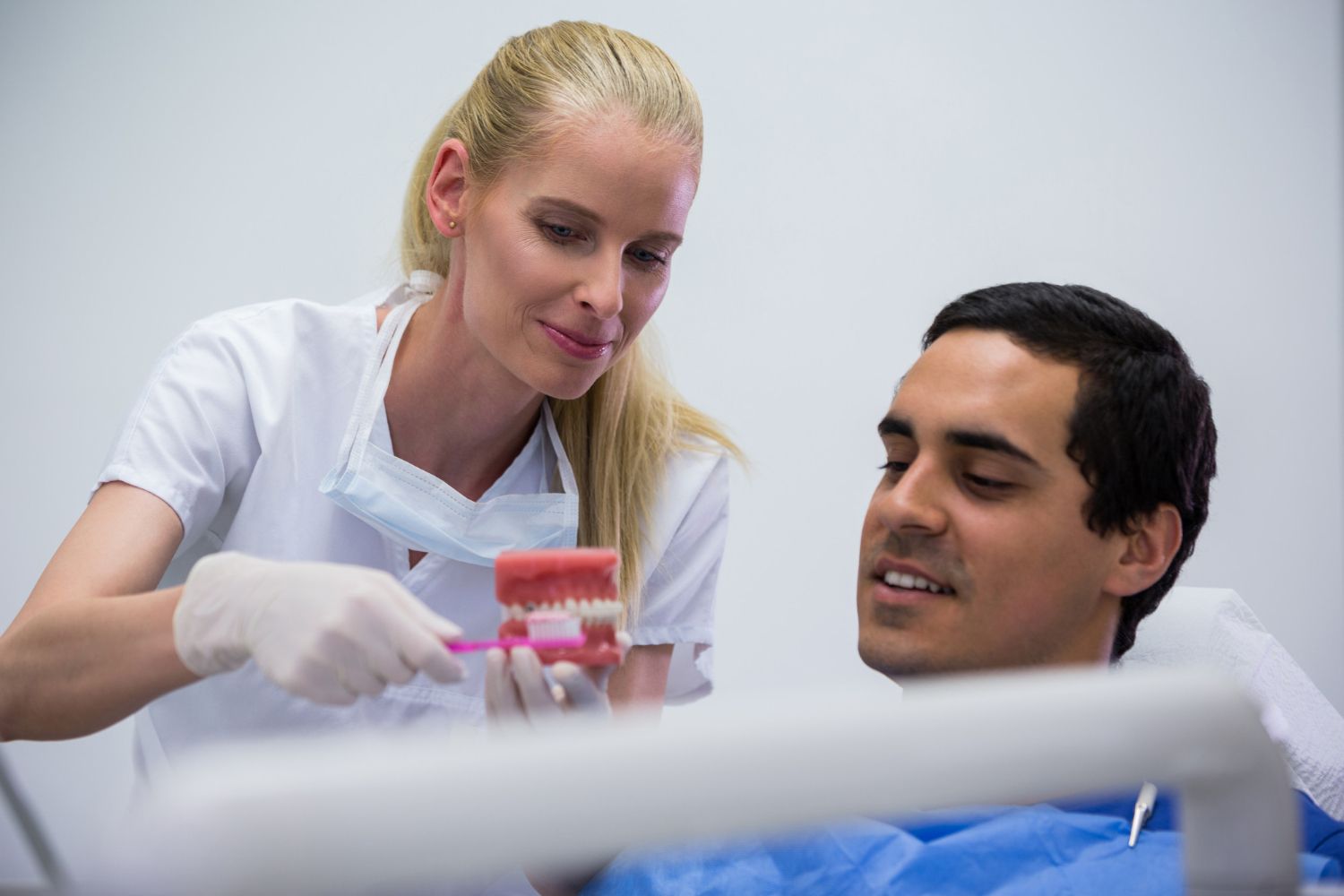
If floss regularly catches or you struggle to reach particular areas, ask for personalized dental hygiene guidance. A demonstration can help identify whether your technique or cleaning tool needs adjusting.
When Is the Best Time to Floss?
The best time to floss is a time you can maintain every day, with flossing before your bedtime brushing offering a practical routine rather than a proven universal advantage, while a consistent morning habit remains preferable to repeatedly skipping interdental cleaning at night.
For example, if you are usually too tired in the evening, keep your floss beside your toothbrush and use it during your morning routine.
Choose a regular cue that makes the habit easier to remember. The best time to floss should fit your schedule without turning daily cleaning into a rushed task.
Which Interdental Cleaning Tool Should You Use?
The right interdental cleaning tool depends on the spaces between your teeth, your dental work and your ability to use it comfortably, with floss often suitable for tight contacts and appropriately sized interdental brushes or water flossers offering useful alternatives in selected situations.
Consider these practical differences:
- String floss: Useful for closely contacting teeth when you can handle it comfortably.
- Interdental brushes: Often suitable for larger spaces; the brush should fit without being forced.
- Water flossers: An option when handling other tools is difficult or dental work complicates access.
Cleaning beneath dental bridges may require a threader or another tool recommended by your dental professional.
If you are undergoing Invisalign treatment, ask your clinician to demonstrate cleaning around attachments and maintaining hygiene during treatment.
What If Your Gums Bleed When You Floss?
Bleeding during flossing can reflect gum inflammation or irritation from forceful technique, so use gentle movements and arrange a dental assessment if bleeding persists, especially when it occurs alongside swelling, tenderness, persistent bad breath or other changes in your teeth and gums.
Bleeding does not automatically mean you should stop cleaning between your teeth. However, repeatedly forcing floss into sore gums is not the solution either.
A bleeding gums evaluation can help distinguish technique-related irritation from inflammation that needs professional care.
Home care has limits
Plaque can harden into calculus, also called tartar. Floss and toothbrushes cannot remove established calculus; professional cleaning is needed.
Dental cleanings and exams help address deposits and assess gum health. If an examination identifies periodontitis, periodontal disease treatment may be necessary alongside an improved home routine. Changing your brushing and flossing order cannot replace that treatment.
Frequently Asked Questions
Can I floss after brushing if I have already brushed?
Yes, you can floss after brushing if you have already brushed, because thorough daily interdental cleaning remains worthwhile regardless of sequence, although choosing to floss first next time is a reasonable way to follow guidance that favors brushing after cleaning between your teeth.
Should I rinse after flossing or brushing?
After brushing with fluoride toothpaste, spit out the excess rather than rinsing immediately with water, and if you want to rinse after flossing, do so before brushing so that you avoid washing away the concentrated fluoride left on your teeth by the toothpaste.
How often should I brush and clean between my teeth?
A useful baseline is to clean between your teeth once daily and brush twice daily for two minutes with fluoride toothpaste, while your dentist or hygienist may recommend a different interdental cleaning tool or additional care according to your gum health and dental work.
Can a water flosser replace string floss?
A water flosser can be a useful interdental cleaning option, especially when handling string floss is difficult, but the best choice depends on your tooth spacing, restorations and technique, so ask your dental professional which device will clean your particular mouth most effectively.
What should I do if I miss a day of flossing?
If you miss a day, resume your usual interdental cleaning routine rather than trying to compensate with forceful flossing, because consistency and gentle technique support plaque control, while recurring difficulty maintaining the habit is a reason to simplify your routine or discuss alternative tools.
Conclusion: Choose a Routine You Can Maintain
Flossing before brushing is a reasonable default supported by limited clinical evidence. Flossing afterward remains acceptable. Prioritize daily interdental cleaning, twice-daily brushing with fluoride toothpaste and professional assessment when bleeding or discomfort persists.
Make your routine work for your smile. Book a dental hygiene and gum health appointment at InStyle Dental Care in Midtown Manhattan for personalized guidance on technique, cleaning tools and preventive care.
What Counts as Restorative Dentistry? Common Restorative Dentistry Procedures and When They Are Used