How to Get Straight Teeth: Invisalign and Other Orthodontic Options
How to Get Straight Teeth: Invisalign and Other Orthodontic Options
If you are wondering how to get straight teeth, the safest and most predictable approach is professional orthodontic treatment. Depending on your teeth, bite, age, oral health, and treatment goals, options may include Invisalign or other clear aligners, traditional braces, limited orthodontic treatment, or selected cosmetic procedures that improve appearance without actually moving the teeth.
The right choice depends on whether you need true teeth straightening, correction of crooked teeth, or broader bite correction for a condition such as crowding, spacing, overbite, underbite, or crossbite.
Patients considering clear aligners can learn more about Invisalign treatment in NYC and whether it may be appropriate for their alignment needs.
How to Get Straight Teeth Safely
The first step is to identify why your teeth are not aligned the way you want.
Crooked or crowded teeth can result from:
- genetics
- limited jaw space
- differences in tooth size
- early or delayed tooth loss
- tooth eruption patterns
- previous orthodontic relapse
- bite problems
- changes in tooth position over time
A professional evaluation helps determine whether your concern is mainly cosmetic or whether there is an underlying malocclusion, meaning the upper and lower teeth do not meet normally.
If you are asking how do I get straight teeth, treatment usually follows this general process:
- dental and bite evaluation
- photographs, scans, or X-rays where appropriate
- diagnosis of crowding, spacing, or bite problems
- selection of an appropriate orthodontic treatment
- active tooth movement
- retention to help maintain the result
The goal is not simply to make teeth look straighter. Good orthodontic treatment should also consider how the teeth fit together and whether the planned movement is healthy for the gums, roots, and supporting bone.
How to Straighten Teeth With Invisalign
Invisalign is one of the most common options for people who want straighter teeth without traditional metal braces.
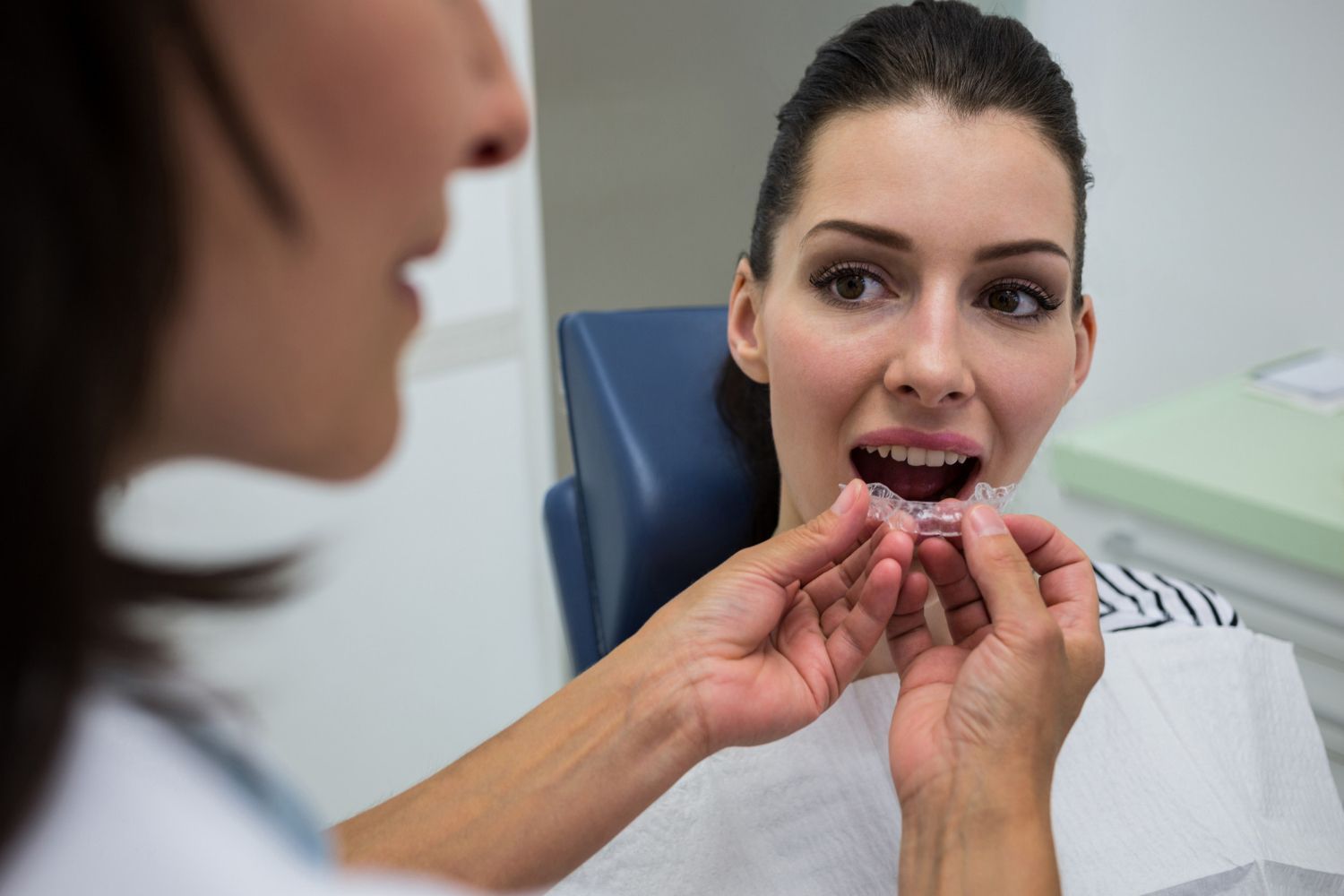
It uses a series of removable clear aligners that are custom-made to apply controlled pressure to specific teeth.
Each aligner represents another stage of planned tooth movement.
InStyle Dental explains that Invisalign may be used for selected cases involving:
- crooked teeth
- crowded teeth
- gaps
- certain overbites
- certain underbites
- open bites
- crossbites
The suitability of Invisalign depends on the exact type and complexity of tooth movement required.
Patients who want a deeper explanation can review how Invisalign works step by step.
Advantages of Invisalign
Potential benefits include:
- clear, less noticeable trays
- removable aligners
- easier brushing and flossing
- fewer food restrictions
- digital treatment planning
- suitability for many mild to moderate alignment problems
Limitations of Invisalign
Clear aligners are not automatically the best option for everyone.
They rely heavily on patient compliance. If aligners are not worn as instructed, treatment may become less predictable.
Some more complex movements or significant bite problems may also be treated more effectively with braces or another orthodontic approach.
How Can I Get Straight Teeth With Traditional Braces?
Traditional braces remain an important orthodontic treatment option.
Braces use brackets attached to the teeth and an orthodontic wire to gradually guide the teeth into new positions.
They may be particularly useful when treatment involves:
- severe crowding
- significant tooth rotations
- complex bite correction
- difficult vertical tooth movements
- cases where removable aligner compliance may be a concern
Because braces remain attached to the teeth, they provide continuous orthodontic force.
The trade-off is that they are more visible and require additional care when brushing and flossing.
If you are comparing your options, InStyle Dental's guide to Invisalign vs braces explains the differences in appearance, removability, treatment complexity, and lifestyle considerations.
Invisalign vs Braces for Straightening Teeth
Both Invisalign and braces physically move teeth.
The main differences involve how the force is delivered and which cases each system can manage predictably.
InvisalignTraditional BracesRemovable clear alignersFixed brackets and wiresLess noticeableMore visibleRequires consistent wearWorks continuouslyEasier access for brushingRequires cleaning around bracketsSuitable for many alignment problemsSuitable for a broad range of casesMay be less suitable for some complex movementsOften useful for complex orthodontic correction
Neither option is inherently better for everyone.
The more useful question is:
Which treatment can move your teeth safely and predictably for your specific type of malocclusion?
Can You Straighten Teeth Without Braces?
Yes, in selected cases.
Clear aligners are the main orthodontic alternative to traditional braces because they actually move teeth.
Other procedures may improve the appearance of alignment without physically repositioning the teeth.
Examples include:
- dental bonding
- porcelain veneers
- crowns in selected restorative cases
These treatments may help with small gaps, tooth shape, chips, or cosmetic irregularities, but they are not equivalent to orthodontic treatment.
InStyle Dental's guide to straightening teeth without braces explains the difference between true tooth movement and cosmetic camouflage.
Cosmetic Alignment vs Orthodontic Treatment
This distinction is important.
Orthodontic treatment
Orthodontics changes the actual position of the teeth.
Examples include:
- Invisalign
- other clear aligners
- traditional braces
Cosmetic smile alignment
Cosmetic procedures may change how teeth look without changing their root position or correcting the bite.
Examples include:
- veneers
- bonding
- crowns
For someone with healthy teeth that are significantly crowded or rotated, covering them with restorations solely to make them appear straighter may involve unnecessary removal or alteration of healthy tooth structure.
Professional diagnosis should come before treatment selection.
How to Fix Crooked or Crowded Teeth
If your main concern is crooked teeth or crowded teeth, treatment depends on the amount of available space and the type of movement required.
Options may include:
- clear aligners
- braces
- expansion in selected cases
- interproximal reduction where clinically appropriate
- extraction in certain complex cases
- combinations of orthodontic techniques
Crowding is not only an aesthetic issue.
Overlapping teeth can make brushing and flossing more difficult and may contribute to areas where plaque accumulates more easily.
For a broader overview of causes and treatment, see how to fix crooked teeth.
What If Your Teeth Are Straight but Your Bite Is Not?
Teeth can appear visually straight while the bite is still misaligned.
This is why someone may ask:
Can you get braces if you have straight teeth?
Yes. Orthodontic treatment may still be recommended when there is a bite problem even if the front teeth look straight.
Examples include:
- overbite
- underbite
- open bite
- crossbite
- abnormal molar relationships
- midline discrepancies
A crossbite, for example, occurs when one or more upper teeth bite inside the lower teeth rather than outside them.
InStyle Dental's guide to what a crossbite is explains how tooth position and jaw relationships can affect treatment planning.
So straight-looking teeth do not automatically mean orthodontic treatment is unnecessary.
Can Adults Get Straight Teeth?
Yes.
Adults can undergo orthodontic treatment when their teeth, gums, bone, and overall oral health are suitable.
Treatment planning may differ from treatment in children or teenagers because adult jaw growth is complete.
Adults may also have:
- crowns
- implants
- periodontal disease
- missing teeth
- previous dental restorations
These factors should be considered before starting orthodontic movement.
Age by itself is not usually the deciding factor.
The health of the supporting tissues and the complexity of the case matter more.
How Long Does It Take to Get Straight Teeth?
There is no universal treatment time.
The timeline depends on:
- severity of crowding
- number of teeth being moved
- bite complexity
- age and biology
- treatment type
- patient compliance
- whether refinement is needed
A minor alignment correction may take considerably less time than treatment involving extensive bite correction.
Avoid promises such as "perfectly straight teeth in three months" without a clinical evaluation.
A personalized treatment plan is more useful than a generic timeline.
What Happens After Teeth Are Straightened?
Orthodontic treatment does not normally end when the last aligner or brace is removed.
A retainer is generally needed to reduce the risk of teeth shifting back toward previous positions.
This stage is called orthodontic retention.
Retainers may be:
- removable clear retainers
- Hawley-style retainers
- fixed bonded retainers
The type and wear schedule depend on the individual treatment plan.
Without appropriate retention, teeth may gradually shift even after successful orthodontic treatment.
Do Straight Teeth Stay Straight Forever?
Not necessarily.
Teeth can continue moving throughout life because of:
- aging
- changes in bite forces
- gum and bone changes
- tooth loss
- orthodontic relapse
- normal biological movement
Long-term retainer wear is therefore commonly recommended after orthodontic treatment.
This is why achieving straight teeth should be viewed as a process that includes both active treatment and long-term retention.
Is Teeth Straightening Only Cosmetic?
No.
Some people pursue treatment mainly because they want a more aligned smile, but orthodontic treatment may also improve function in appropriate cases.
Potential benefits can include:
- improved tooth alignment
- easier access for brushing and flossing
- improved bite relationships
- reduced abnormal tooth contacts
- improved chewing function in selected cases
However, not every small irregularity needs treatment.
If teeth are healthy and the bite functions well, mild misalignment may be primarily cosmetic.
Treatment should therefore reflect the patient's actual needs and goals rather than the assumption that every tooth must appear perfectly straight.
Maintaining good periodontal health before and during treatment is also important, which is why regular professional dental hygiene should remain part of orthodontic care.
Can You Straighten Teeth Naturally at Home?
There is no safe home exercise that predictably moves permanent teeth into proper alignment.
Avoid methods involving:
- rubber bands
- homemade wires
- pressing teeth with your fingers
- improvised appliances
- unsupervised tooth-moving devices
Orthodontic movement affects the periodontal ligament and supporting bone around tooth roots.
Applying uncontrolled force can damage teeth, gums, roots, or bone.
Professional evaluation is much safer than attempting DIY tooth movement.
How to Choose the Best Teeth Straightening Option
The right choice should be based on diagnosis rather than appearance alone.
Ask these questions:
What problem needs correcting?
Is it:
- simple crowding?
- spacing?
- rotated teeth?
- crossbite?
- overbite?
- multiple bite problems?
Do you want removable treatment?
If discretion and removability are major priorities, Invisalign may be appealing if your case is suitable.
Will you wear aligners consistently?
Clear aligners depend on compliance.
Braces may be more practical for patients who do not want responsibility for managing removable trays.
Is your oral health stable?
Active gum disease, untreated cavities, or other dental problems may need to be addressed before orthodontic treatment begins.
InStyle Dental provides broader general dentistry care in NYC, including examination of teeth, gums, bite, and overall oral health before more specialized treatment.
Frequently Asked Questions
How do I get straight teeth?
The most predictable way to straighten teeth is through professionally supervised orthodontic treatment such as Invisalign, other clear aligners, or braces. The right option depends on your tooth position, bite, and treatment goals.
How can I get straight teeth without metal braces?
Clear aligners such as Invisalign may be an option for many cases involving crowding, spacing, and selected bite problems. More complex cases may still require braces or another orthodontic approach.
How long does teeth straightening take?
Treatment time varies according to crowding, bite complexity, tooth movement, biological response, and the treatment method used. A clinical examination is necessary for a reliable estimate.
Can you get braces if you have straight teeth?
Yes. Teeth can look straight while the bite remains misaligned. Braces or another orthodontic treatment may be recommended for bite correction even when the front teeth appear aligned.
Is Invisalign good for crooked teeth?
Invisalign can treat many mild to moderate cases of crooked or crowded teeth, but suitability depends on the type and complexity of movement required. An individual assessment is necessary.
Conclusion
If you want to know how to get straight teeth, start with a professional evaluation rather than choosing a treatment based only on appearance or advertising.
Invisalign and other clear aligners can be effective for many cases involving crooked teeth, crowding, spacing, and selected bite problems. Traditional braces remain an important option for more complex orthodontic treatment, while cosmetic procedures such as veneers or bonding may improve appearance without actually repositioning teeth.
The best treatment is the one that addresses your tooth alignment, bite, oral health, and long-term treatment goals.
If you are considering teeth straightening in New York City, schedule an evaluation with InStyle Dental to discuss whether Invisalign or another orthodontic option is appropriate for you. Visit the Invisalign treatment page or contact InStyle Dental to arrange a consultation.