Do You Have to Wear a Retainer After Invisalign? How Long to Wear It
Do You Have to Wear a Retainer After Invisalign? How Long to Wear It
Do you have to wear a retainer after Invisalign? In most cases, yes. Retainers are a standard part of post-Invisalign care because teeth can gradually shift after active orthodontic treatment ends. Invisalign aligners move teeth into new positions, while retainers help hold those teeth in place as the surrounding bone and soft tissues adapt. Invisalign itself states that retainers are needed after treatment to help maintain the result, and the American Association of Orthodontists similarly recommends long-term retention after orthodontic treatment.
At InStyle Dental, patients considering or completing Invisalign treatment in New York City can receive individualized guidance on retainers, wear schedules, and long-term orthodontic maintenance.
Do You Need a Retainer After Invisalign?
Yes, most patients need a retainer after completing Invisalign.
During treatment, clear aligners apply controlled forces that gradually move teeth. Once the final aligner is completed, those forces stop. The tissues and bone supporting the teeth still need time to stabilize around their new positions.
Without appropriate orthodontic retention, teeth can begin to move again.
The American Association of Orthodontists explains that tooth movement continues throughout life and that retainers help maintain the positions created during orthodontic treatment.
A retainer therefore serves a different purpose from an Invisalign aligner:
- Invisalign aligners move teeth
- Retainers hold teeth in their corrected positions
Finishing your last Invisalign tray is the end of active tooth movement, but it is not necessarily the end of orthodontic care.
Why Do Teeth Shift After Invisalign?
Teeth are not permanently fixed in the jaw after orthodontic movement.
They are supported by:
- periodontal ligaments
- surrounding bone
- gum tissue
- neighboring teeth
- bite forces
- muscles of the lips and tongue
When orthodontic treatment moves a tooth, the tissues around it must remodel.
Immediately after treatment, there is a greater risk of orthodontic relapse, meaning the teeth begin moving toward previous positions.
Over time, natural aging, chewing forces, grinding, tooth loss, and other changes can also contribute to teeth shifting.
This is why long-term retention is important even when Invisalign treatment was successful.
Patients who want to understand the active phase before retention can review how Invisalign works step by step. That guide also explains that retainers are used after active treatment to maintain tooth alignment.
How Do Invisalign Retainers Work?
If you are wondering how do Invisalign retainers work, their job is relatively simple: they fit around the teeth and resist unwanted movement.
A removable retainer is custom-made from a scan or impression of your teeth after orthodontic treatment.
Rather than applying a sequence of forces to move teeth like Invisalign trays do, the retainer is designed to keep the final alignment stable.
This gives the supporting tissues time to adapt while reducing the risk of relapse.
Invisalign Aligners vs Retainers
The two may look similar, but they are not interchangeable.
Invisalign alignersRetainersDesigned to move teethDesigned to maintain tooth positionChanged throughout treatmentUsually worn for longer periodsEach tray represents a stage of movementBased on the final tooth positionPart of active orthodontic treatmentPart of the retention phaseApplies planned orthodontic forcePrimarily resists unwanted movement
Invisalign notes that Vivera retainers are made differently from active Invisalign aligners because retainers need to remain more rigid to maintain tooth position.
How Long to Wear a Retainer After Invisalign
There is no single wear schedule that applies to every patient.
Your dentist or orthodontic provider should determine how long to wear a retainer after Invisalign based on your original tooth positions, bite, treatment complexity, age, periodontal health, and the stability of the final result.
A common pattern is:
Immediately After Invisalign
Some patients are instructed to wear removable retainers for most of the day and night during the early retention period, removing them mainly for:
- meals
- brushing
- flossing
- cleaning the retainer
This stage is important because the teeth are particularly vulnerable to movement immediately after active treatment.
After the Initial Retention Period
Once the provider is satisfied that the teeth are stabilizing, wear may be reduced to nighttime.
This is why many patients eventually use a nighttime retainer.
Long-Term Retention
The American Association of Orthodontists recommends ongoing retainer use because teeth can continue moving throughout life. In many cases, nighttime retainer wear is continued indefinitely.
So if you are asking how long do you wear a retainer after Invisalign, the practical answer is:
Expect regular retainer wear immediately after treatment, followed by long-term or lifelong nighttime use if recommended by your provider.
Your specific schedule may be different.
How Long Do You Wear Retainers After Invisalign Each Day?
During the initial retention stage, your provider may recommend wearing removable retainers for most of the day.
Later, many patients transition to wearing them only while sleeping.
The exact number of hours should come from your treating provider rather than a generic schedule online.
Factors that may affect the recommendation include:
- severity of the original crowding
- spacing
- rotated teeth
- bite correction
- history of relapse
- periodontal condition
- age
- retainer type
A patient treated for mild spacing may have different retention needs from someone who had significant crowding or complex bite correction.
For people still deciding between orthodontic options, InStyle Dental's guide comparing Invisalign vs braces explains how clear aligners and fixed braces differ during active treatment. Both approaches generally require retention afterward.
What Is a Vivera Retainer?
A Vivera retainer is a clear removable retainer made by Align Technology, the company behind Invisalign.
Vivera retainers are custom-made to fit the patient's teeth after orthodontic treatment.
They are designed to maintain alignment rather than continue active tooth movement.
According to Invisalign, Vivera retainers are made from a more rigid material than active Invisalign aligners because the purpose is to hold teeth in their corrected positions.
Vivera is one option, but it is not the only retainer available after Invisalign.
Your provider may recommend another removable or fixed retainer depending on your needs.
What Does an Invisalign Retainer Look Like?
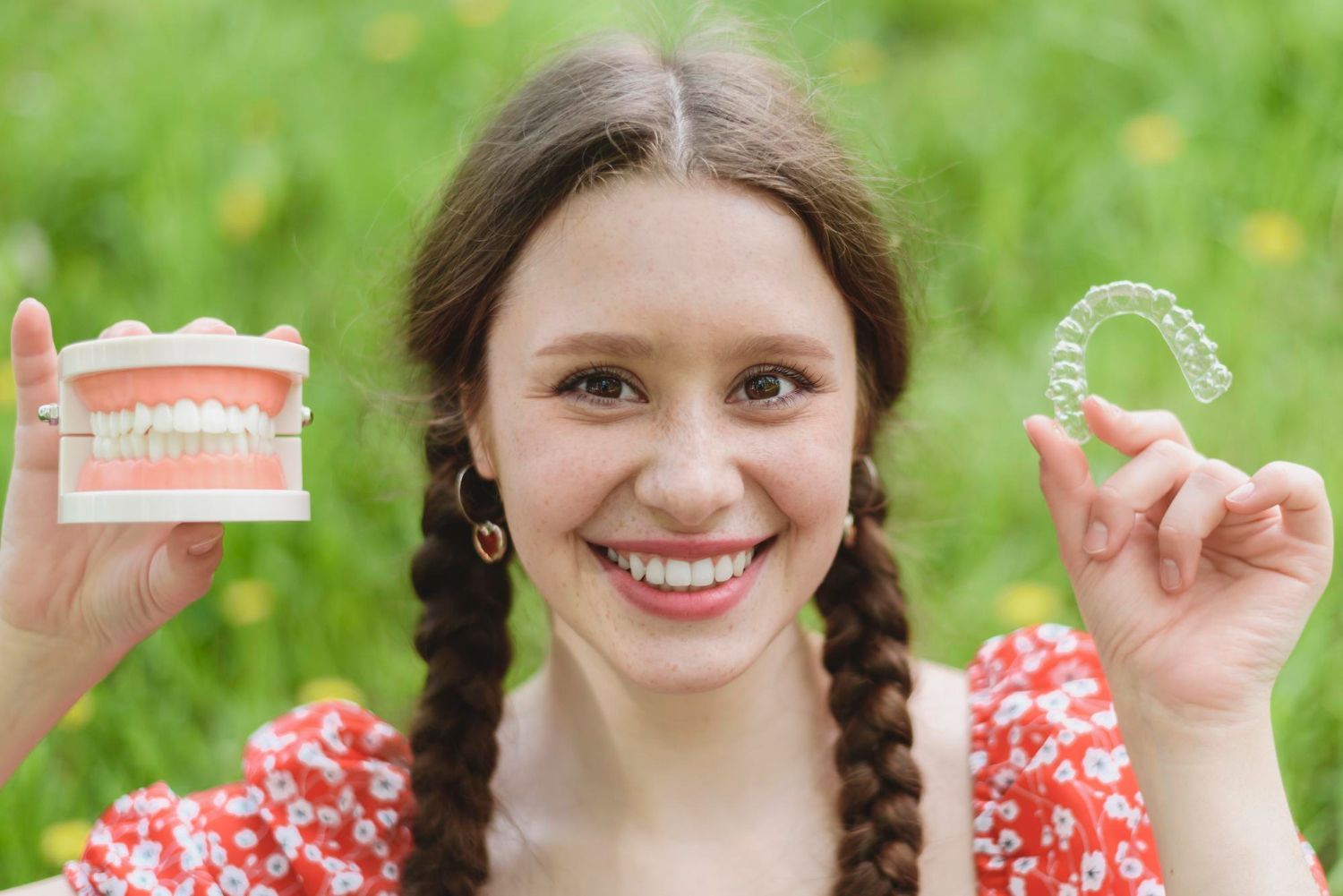
If you are wondering what does an Invisalign retainer look like, a clear removable retainer usually resembles a transparent tray that fits closely over the teeth.
It can look similar to an Invisalign aligner, but there are important differences.
A clear retainer is typically:
- transparent
- custom-fitted
- removable
- shaped around the teeth
- thicker or more rigid than an active aligner, depending on the product
Because it is clear, it may be difficult for other people to notice when worn.
Another option is a fixed retainer, which looks very different.
A fixed retainer typically consists of a thin wire bonded behind the front teeth.
What Types of Retainers Can Be Used After Invisalign?
There are two broad categories.
Removable Retainers
These can be taken out by the patient.
Examples include:
- clear plastic retainers
- Vivera retainers
- Hawley-style retainers
Clear retainers are popular after Invisalign because they preserve the discreet appearance many patients preferred during treatment.
Fixed Retainers
A fixed or bonded retainer usually consists of a thin wire attached behind selected front teeth.
Because it remains in place continuously, patients do not need to remember to insert it each night.
However, fixed retainers:
- require careful cleaning
- can occasionally loosen or break
- generally retain only the teeth to which they are bonded
- still require regular dental monitoring
Some patients use both a bonded retainer and a removable nighttime retainer.
The appropriate choice depends on individual orthodontic needs.
Are Invisalign Retainers the Same as the Last Invisalign Tray?
No.
Patients sometimes assume they can simply keep wearing their final Invisalign tray indefinitely.
The final aligner may temporarily hold the teeth while a retainer is being made if the provider advises it, but it is not necessarily designed for long-term retention.
Active Invisalign trays are designed for tooth movement and are routinely replaced during treatment.
A proper retainer is designed specifically for the retention phase.
Follow your provider's instructions rather than deciding to use an old aligner permanently.
What Happens If You Stop Wearing Your Retainer?
If retainer wear stops, teeth may begin shifting.
How quickly this happens varies considerably.
Some patients notice:
- small gaps returning
- crowding
- rotated teeth
- changes in bite
- a retainer feeling tighter than before
The greatest concern is orthodontic relapse.
Minor movement may initially seem cosmetic, but enough movement can affect how the retainer fits and, in some cases, may require additional orthodontic treatment.
Invisalign notes that retainers are intended to reduce the risk of teeth shifting after aligner treatment and that a retainer is not generally intended to re-correct significant relapse once teeth have moved.
If you notice your teeth becoming crooked again, InStyle Dental also provides information about crooked teeth treatment in New York.
What If Your Retainer Feels Tight?
A retainer that feels mildly snug after a missed night may indicate that the teeth have started moving slightly.
Do not force a retainer onto teeth if:
- it causes significant pain
- it will not fully seat
- it is cracked
- it appears distorted
- your teeth have visibly shifted
Contact your dental or orthodontic provider.
Trying to force an incorrectly fitting retainer may not be appropriate, particularly if meaningful relapse has occurred.
The AAO recommends contacting your provider when a retainer no longer fits rather than waiting for additional movement.
What If You Lose Your Invisalign Retainer?
Contact your provider as soon as possible.
Do not wait several weeks to replace it.
Teeth can move while the retainer is not being worn, particularly during the early retention period.
Your provider may:
- make a replacement from an existing digital scan
- take a new scan
- evaluate whether tooth movement has occurred
- recommend temporary use of another appliance where appropriate
Do not automatically use an old Invisalign tray unless your treating provider tells you to do so.
How Long Do Invisalign Retainers Last?
Patients also commonly ask how long do Invisalign retainers last.
There is no fixed lifespan for every retainer.
How long a removable retainer lasts depends on:
- material
- thickness
- teeth grinding or clenching
- frequency of wear
- cleaning habits
- exposure to heat
- how it is stored
- normal wear and tear
Even a retainer that looks intact can gradually become:
- loose
- cracked
- distorted
- worn
- discolored
A damaged or loose retainer may no longer maintain tooth position properly.
Vivera retainers are designed as longer-term retention appliances, but Invisalign does not give one universal replacement interval because individual wear varies.
Your provider should periodically assess the fit.
When Should You Replace an Invisalign Retainer?
Contact your dentist or orthodontic provider if your retainer:
- develops cracks
- breaks
- becomes noticeably loose
- no longer seats completely
- becomes permanently distorted
- has sharp edges
- develops significant wear
- is lost
Do not wait until the retainer breaks completely if its fit has already changed.
Regular dental visits provide an opportunity to evaluate both your retainer and your overall oral health.
How to Care for Your Invisalign Retainer
Good maintenance can improve hygiene and help prevent premature damage.
Clean It Regularly
Rinse the retainer after removing it.
Follow the manufacturer's and provider's cleaning instructions.
Invisalign recommends gently brushing Vivera retainers and rinsing them thoroughly.
Avoid Excessive Heat
Do not place clear retainers in:
- boiling water
- very hot water
- dishwashers
- hot cars
Heat can distort some plastic retainers and alter their fit.
Store It in Its Case
When the retainer is not in your mouth, use its protective case.
Wrapping it in a napkin at a restaurant is an easy way to accidentally throw it away.
Maintain Oral Hygiene
Brush and floss before replacing a clean retainer whenever practical.
Regular dental hygiene and preventive care also remain important after Invisalign treatment.
Can Retainers Move Teeth Like Invisalign?
A retainer is primarily intended to maintain tooth position.
It should not be viewed as a substitute for active Invisalign treatment.
If minor movement occurs, a retainer may sometimes feel tighter, but significant relapse generally requires professional assessment.
If teeth have shifted enough, treatment might involve:
- new clear aligners
- limited orthodontic retreatment
- other orthodontic correction
The correct approach depends on how much movement has occurred.
Can You Stop Wearing a Retainer After Several Years?
This is a common misconception.
The risk of movement decreases as the tissues adapt, but teeth can continue changing throughout adulthood.
That is why long-term nighttime retainer use is widely recommended.
The AAO states that ongoing retention is typically necessary because natural tooth movement continues throughout life.
You should not stop wearing your retainer simply because treatment was completed several years ago unless your provider advises otherwise.
Do Retainers Prevent All Teeth Shifting?
Retainers substantially reduce unwanted movement, but no orthodontic result should be described as completely permanent.
Aging, tooth wear, periodontal changes, missing teeth, and other biological factors can influence tooth position.
Good post-Invisalign care therefore includes more than wearing the appliance.
It should also include:
- regular dental checkups
- appropriate retainer wear
- good oral hygiene
- monitoring retainer fit
- addressing gum disease
- replacing damaged retainers
- reporting noticeable tooth movement
The objective is to protect the treatment results as effectively as possible over time.
How to Know Which Retainer Is Right for You
The best retainer is not necessarily the same for every Invisalign patient.
Your provider should consider:
- original tooth alignment
- bite
- degree of crowding
- spacing
- periodontal health
- likelihood of relapse
- grinding or clenching
- oral hygiene
- patient compliance
For example, someone who repeatedly forgets removable retainers may benefit from discussing a fixed option, while another patient may prefer the convenience and easier cleaning of a removable clear retainer.
The decision should be individualized.
Frequently Asked Questions
Do you have to wear retainers after Invisalign forever?
Long-term retainer wear is generally recommended because teeth can continue shifting throughout life. Many patients eventually transition from more frequent wear to a nighttime schedule. Your dentist or orthodontic provider should determine your specific plan.
How long do you wear a retainer after Invisalign?
Some patients wear retainers for most of the day during the initial retention period and later transition to nighttime wear. Long-term retention is commonly recommended, but the exact schedule varies by patient.
What does an Invisalign retainer look like?
A clear Invisalign-style retainer resembles a transparent tray molded closely around the teeth. It looks similar to a clear aligner but is designed to maintain alignment rather than actively move teeth.
How long do Invisalign retainers last?
There is no universal lifespan. Durability depends on the retainer material, wear schedule, cleaning, grinding, heat exposure, and how well it is stored. Replace the retainer if it becomes cracked, distorted, loose, or no longer fits correctly.
How do Invisalign retainers work?
They hold teeth in their corrected positions after active orthodontic treatment. This helps reduce relapse while the supporting bone and soft tissues adapt and also helps manage natural tooth movement over time.
Conclusion
So, do you have to wear a retainer after Invisalign? For most patients, yes. Retainers are an essential part of maintaining the alignment achieved with Invisalign because teeth can shift after active treatment ends.
The early retention period may require more frequent wear, followed by a transition to a nighttime retainer. Many patients continue some form of retention indefinitely. The exact schedule, retainer type, and replacement frequency should be determined by your treating provider.
If you are considering Invisalign, approaching the end of treatment, or have a retainer that no longer fits, schedule an evaluation with InStyle Dental. Learn more about Invisalign in New York City or contact InStyle Dental to schedule an appointment.