Root Canal Symptoms: How Do You Know If You Need a Root Canal?
Root Canal Symptoms: How Do You Know If You Need a Root Canal?
Root canal symptoms often appear when the dental pulp inside a tooth becomes inflamed, infected, or badly damaged. Common warning signs include persistent tooth pain, lingering sensitivity to hot or cold, pain when biting, gum swelling, a pimple-like bump on the gum, or tooth discoloration. However, symptoms alone cannot confirm that treatment is needed. A dentist usually needs to examine the tooth and may use dental X-rays and pulp testing to determine the cause.
If you are asking how do you know if you need a root canal, the most important point is this: a root canal is generally recommended when the pulp inside a tooth is irreversibly inflamed, infected, or necrotic and the tooth can still be restored. InStyle Dental provides root canal treatment in New York City for patients experiencing tooth pain, swelling, sensitivity, or other signs of pulp infection.
What Is a Root Canal?
A root canal, or endodontic treatment, is a procedure used to treat disease or damage inside a tooth.
Inside every natural tooth is a space containing the dental pulp, which includes nerves, blood vessels, and connective tissue. When deep decay, trauma, cracks, or infection significantly damage this tissue, the pulp may no longer be able to heal.
During root canal treatment, the dentist or endodontic provider removes the diseased pulp, cleans and disinfects the internal root canal system, fills and seals the space, and then restores the tooth.
The goal is to preserve the natural tooth whenever it is clinically appropriate rather than removing it.
How Do You Know If You Need a Root Canal?
The strongest signs that a tooth may need root canal treatment include:
- persistent or severe tooth pain
- lingering sensitivity to hot or cold
- pain when biting or chewing
- swelling around a tooth
- a pimple or draining area on the gum
- tooth discoloration after trauma
- deep decay close to the pulp
- tenderness around the root of the tooth
Not everyone experiences all of these symptoms.
In fact, some teeth with pulp necrosis may produce relatively little pain. That is why how to know if you need a root canal cannot be answered based on pain alone.
A proper diagnosis combines symptoms with examination findings and imaging.
1. Persistent Tooth Pain
Persistent pain is one of the most recognized root canal symptoms.
The pain may:
- occur without an obvious trigger
- become worse when lying down
- radiate toward the jaw, ear, or nearby teeth
- disappear temporarily and then return
- become progressively more intense
However, tooth pain does not automatically mean you need endodontic treatment.
Pain can also result from:
- cavities
- cracked teeth
- gum disease
- bite problems
- teeth grinding
- sinus pressure
- damaged fillings
A dentist must identify where the pain is actually coming from.
2. Lingering Sensitivity to Hot or Cold
Short-lived sensitivity does not necessarily indicate severe pulp damage.
For example, cold sensitivity can occur with exposed dentin, enamel wear, gum recession, or a small cavity.
A more concerning pattern is lingering sensitivity.
If discomfort continues after the hot or cold stimulus has been removed, the pulp may be significantly inflamed.
The duration, intensity, and reproducibility of the response can help a dentist determine whether the pulp may recover or whether irreversible pulp inflammation is more likely.
3. Pain When Biting or Chewing
Pain when pressure is applied to a tooth can sometimes indicate inflammation around the root.
Patients may notice:
- pain while chewing
- tenderness when biting
- discomfort when tapping the tooth
- a sensation that the tooth feels “high”
These symptoms may occur with apical periodontitis, cracks, trauma, or an infection affecting the tissues around the root.
Because several conditions can produce biting pain, diagnostic testing is important before deciding on treatment.
4. Swollen or Tender Gums
Swelling near one tooth can be a sign of infection.
The gum may appear:
- red
- raised
- tender
- swollen
In more advanced infections, swelling may extend into the face or jaw.
A dental infection that is causing spreading facial swelling, fever, difficulty swallowing, or difficulty breathing requires urgent evaluation.
5. A Pimple or Bump on the Gum
A small pimple-like bump on the gum near a tooth may represent a draining sinus tract, sometimes called a gum boil.
This can occur when an infection around the root drains through the surrounding tissues.
Patients may notice:
- a recurring bump
- drainage
- pus
- an unpleasant taste
- temporary relief after the area drains
A draining infection may cause surprisingly little pain, but that does not mean the underlying problem has resolved.
6. Tooth Discoloration
A tooth that becomes darker after an injury may indicate damage to the pulp.
Possible changes include:
- gray coloration
- brown discoloration
- a noticeably darker shade compared with neighboring teeth
Discoloration alone does not prove that a root canal is necessary.
The dentist may need to evaluate the tooth's response to pulp testing, its history of trauma, radiographic appearance, and other clinical findings.
7. Deep Tooth Decay
A cavity begins in the outer layers of a tooth.
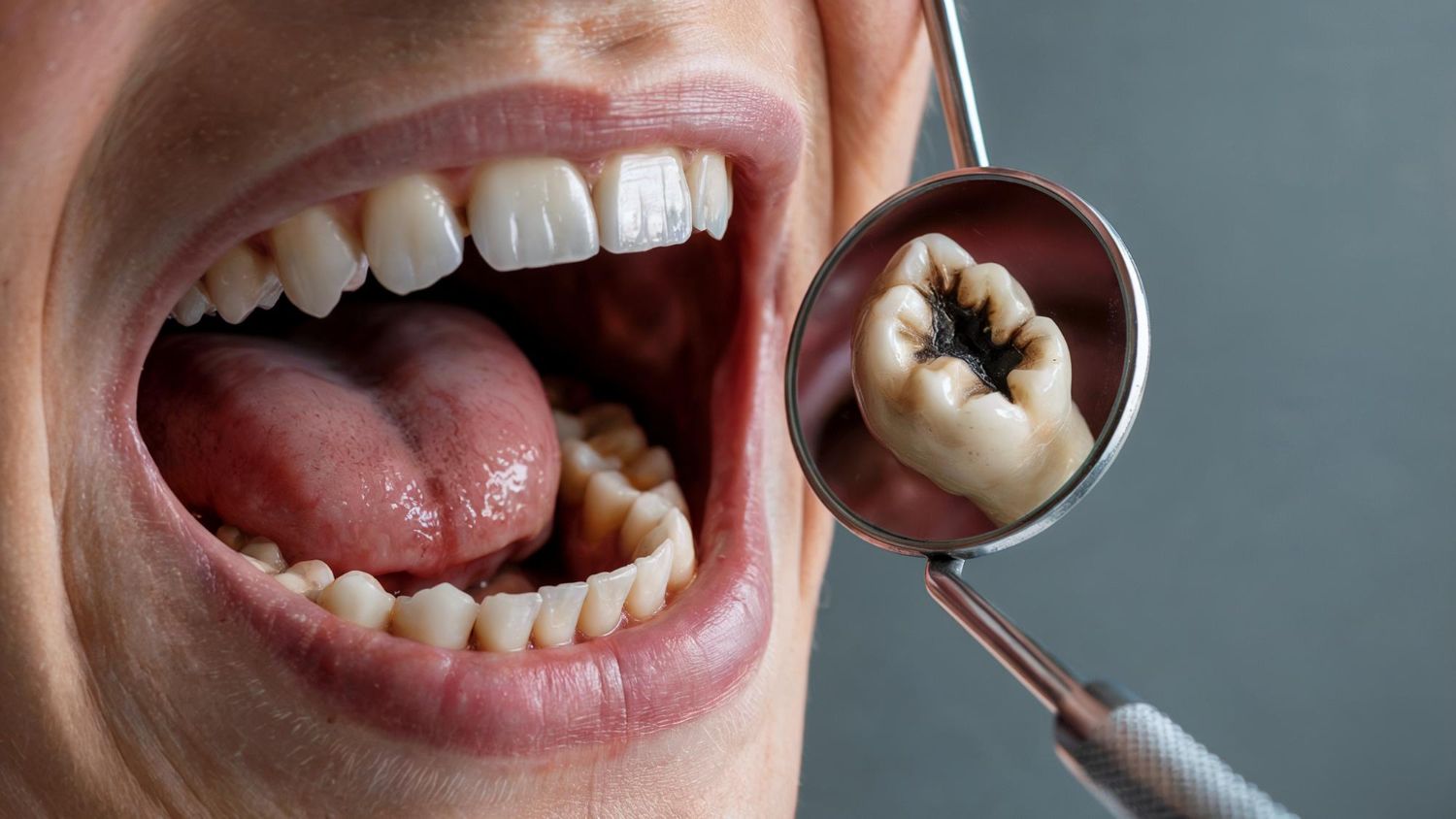
If it progresses through enamel and dentin toward the pulp, bacteria and inflammatory changes may eventually affect the nerve tissue.
Early cavities may often be treated with dental fillings in New York City. However, InStyle Dental notes that untreated decay can extend deeper into the tooth and eventually require root canal treatment, a crown, or extraction.
This is why early diagnosis matters.
8. A Cracked or Injured Tooth
A crack can create a pathway for bacteria to reach the pulp.
Trauma can also damage the blood supply inside a tooth even when there is no obvious cavity.
Examples include:
- sports injuries
- falls
- biting hard objects
- large existing restorations
- teeth grinding
- accidental impact
Some cracked teeth can be restored without root canal therapy, while others may need endodontic treatment depending on how deeply the crack extends and whether the pulp is affected.
Root Canal Symptoms vs Normal Tooth Sensitivity
Not every sensitive tooth needs a root canal.
The pattern matters.
SymptomMay be less concerningMay require deeper evaluationCold sensitivityBrief and disappears quicklyLingers after cold is removedToothacheMild and linked to a clear triggerSpontaneous, persistent, or worseningBiting discomfortTemporary after dental workPersistent or increasingGum swellingGeneral irritationLocalized swelling beside one toothTooth colorStable natural variationTooth darkens after injury
This table is only a general guide.
Diagnosis should not be made from symptoms alone.
Do I Need a Root Canal or Just a Filling?
This is one of the most important distinctions for patients.
A dental filling is usually appropriate when decay has damaged the outer tooth structure but the pulp remains healthy enough to preserve.
A root canal may be needed when disease has reached the pulp and the inflammation or infection cannot reasonably heal.
A filling may be enough when:
- decay is limited to enamel or dentin
- the pulp remains healthy
- symptoms are mild or absent
- the tooth has enough remaining structure
Root canal treatment may be considered when:
- pulp inflammation is irreversible
- the pulp has become infected
- the pulp has died
- there is infection around the root
- a crack or trauma has significantly affected the pulp
InStyle Dental's general dentistry services include fillings, crowns, root canal care, and other treatments used depending on the underlying diagnosis.
Do I Need a Root Canal or an Extraction?
A root canal and an extraction solve different problems.
Root Canal Treatment
The goal is to preserve the natural tooth.
The infected or damaged pulp is removed, but the tooth itself remains.
Extraction
The entire tooth is removed.
Extraction may be necessary when:
- the tooth cannot be predictably restored
- a fracture extends too far below the gum or through the root
- severe structural damage is present
- periodontal support is inadequate
- another clinical factor makes retention inappropriate
When a tooth can be predictably treated and restored, preserving the natural tooth is often an important treatment goal.
How Can You Tell If You Need a Root Canal Without Severe Pain?
You cannot reliably determine this yourself.
One misconception is that root canal treatment is only necessary when a tooth is extremely painful.
A tooth with a dead or necrotic pulp may eventually stop responding to temperature because the nerve tissue is no longer vital.
That can sometimes create the impression that the problem has improved.
Meanwhile, infection may persist around the root.
Possible signs without severe pain include:
- gum swelling
- a draining gum bump
- tooth discoloration
- tenderness when biting
- abnormalities found on a dental X-ray
- a history of trauma
This is one reason routine examinations remain important even when symptoms are not dramatic.
How Does a Dentist Know You Need a Root Canal?
If you ask how do I know I need a root canal, the definitive answer usually comes from a clinical diagnosis rather than a symptom checklist.
A dentist may use several methods.
Dental History
The dentist may ask:
- when the pain started
- whether it is spontaneous
- what triggers it
- how long sensitivity lasts
- whether the tooth has been injured
- whether swelling has occurred
- whether previous dental work was performed
Clinical Examination
The dentist examines:
- cavities
- cracks
- restorations
- gum swelling
- tooth mobility
- bite
- visible fractures
Percussion and Palpation
The dentist may gently tap the tooth or press on tissues near the root.
Tenderness can provide information about inflammation around the root.
Pulp Vitality Testing
Tests may evaluate whether the dental pulp responds normally.
Cold testing is commonly used.
The dentist compares the response with nearby teeth and considers both the intensity and duration of the sensation.
Dental X-Rays
X-rays may help identify:
- deep decay
- changes around the root tip
- previous restorations
- bone changes
- anatomy of the roots
An X-ray alone does not always determine whether a root canal is required. It is interpreted together with symptoms and clinical tests.
What Conditions Commonly Lead to Root Canal Treatment?
Several dental conditions can affect the pulp.
Deep Dental Decay
Bacteria from untreated decay may eventually reach the pulp.
Cracked Teeth
Deep cracks can expose or irritate pulp tissue.
Dental Trauma
A blow to a tooth can damage the pulp even without visible fracture.
Repeated Dental Treatment
Multiple procedures on the same tooth can sometimes contribute to pulp irritation.
Leaking or Failed Restorations
Decay or bacterial contamination beneath an older filling or crown may eventually affect the pulp.
These are causes and risk factors—not automatic indications for a root canal.
What Happens If You Need a Root Canal?
If diagnosis confirms that endodontic treatment is appropriate, the procedure generally involves several stages.
InStyle Dental describes its root canal procedure in NYC as involving diagnosis with X-rays, local anesthesia and isolation of the tooth, cleaning of the pulp chamber and canals, sealing the canals with gutta-percha, and final restoration of the tooth.
A simplified process is:
- The tooth is numbed.
- The dentist accesses the pulp chamber.
- Inflamed or infected pulp is removed.
- The canals are cleaned and shaped.
- The canals are disinfected.
- The internal space is filled and sealed.
- The tooth receives an appropriate final restoration.
Depending on the tooth, a crown may be recommended afterward to protect the remaining structure.
Does a Root Canal Hurt?
Modern root canal treatment is performed using local anesthesia.
The goal is to control discomfort during the procedure.
Patients may experience temporary tenderness afterward, particularly if inflammation was present around the tooth before treatment.
Significant or worsening pain, facial swelling, fever, or other concerning symptoms after treatment should be reported to the treating dentist.
Why Early Diagnosis Matters
A tooth with pulp disease does not usually improve simply because the symptoms become less noticeable.
Delaying evaluation may allow:
- decay to progress
- infection to spread
- more tooth structure to be lost
- swelling to develop
- restorative options to become more limited
Early diagnosis does not always mean a root canal.
In some cases, evaluation may reveal that the tooth only requires a filling, bite adjustment, periodontal treatment, or another less extensive intervention.
That is exactly why professional diagnosis is valuable.
Can Root Canal Symptoms Go Away on Their Own?
Symptoms can change, but symptom improvement does not always mean the underlying problem has healed.
For example, severe sensitivity may decrease if the pulp becomes necrotic.
An abscess may also temporarily feel better if it drains.
Neither situation necessarily means the infection has resolved.
Persistent, recurring, or unexplained symptoms should therefore be assessed rather than monitored indefinitely.
When Should You See a Dentist?
Schedule a dental evaluation if you have:
- persistent toothache
- lingering sensitivity
- pain when chewing
- swelling near a tooth
- a gum bump that drains
- a darkened tooth after trauma
- a broken or deeply decayed tooth
- symptoms that repeatedly return
Seek urgent dental or medical attention for rapidly increasing facial swelling, fever with dental swelling, difficulty swallowing, or difficulty breathing.
InStyle Dental provides comprehensive preventive and restorative care at its Midtown Manhattan practice, including root canal treatment, fillings, examinations, and other general dental services.
How to Reduce the Risk of Needing a Root Canal
Not every cause is preventable, particularly traumatic injuries, but reducing decay and tooth damage can lower risk.
Helpful measures include:
- brush twice daily with fluoride toothpaste
- clean between teeth daily
- limit frequent sugary snacks and drinks
- attend regular dental examinations
- treat cavities before they become deeper
- replace damaged restorations when appropriate
- use a mouthguard when playing contact sports
- address grinding or clenching when diagnosed
Professional dental hygiene in New York City can also support cavity and gum-disease prevention through routine cleaning, plaque and tartar removal, and preventive evaluation.
Frequently Asked Questions
How do you know if you need a root canal?
Persistent pain, lingering temperature sensitivity, biting pain, localized swelling, gum drainage, deep decay, or changes after trauma can suggest pulp disease. A dentist confirms the diagnosis using an examination, pulp testing, and dental imaging.
How can you tell if you need a root canal or just a filling?
A filling generally treats decay that has not irreversibly damaged the pulp. Root canal therapy treats disease inside the tooth when the pulp is irreversibly inflamed, infected, or necrotic. Only an examination can reliably distinguish the two.
Do I need a root canal if my tooth does not hurt?
Possibly. Some teeth with pulp necrosis or chronic infection cause little or no pain. Dental X-rays, swelling, drainage, discoloration, or testing may reveal a problem despite minimal symptoms.
How do you know when you need a root canal after a tooth injury?
A traumatized tooth may require treatment if the pulp becomes irreversibly damaged or dies. Warning signs can include discoloration, persistent pain, swelling, sensitivity, or radiographic changes, but professional testing is required.
Are root canal symptoms always severe?
No. Some patients have strong pain or sensitivity, while others experience mild symptoms or none at all. The severity of pain does not reliably indicate the severity of pulp disease.
Conclusion
Root canal symptoms can include persistent tooth pain, lingering sensitivity, pain when biting, swelling, gum drainage, tooth discoloration, deep decay, or symptoms following dental trauma. But no individual symptom proves that root canal treatment is necessary.
So, how do you know if you need a root canal? The most reliable answer comes from a dental examination that evaluates the pulp, tooth structure, surrounding tissues, and dental X-rays.
If you have persistent tooth pain, swelling, sensitivity, or another symptom that concerns you, schedule an evaluation rather than waiting for the problem to worsen. Learn more about root canal treatment in New York City at InStyle Dental and book an assessment with the Midtown Manhattan dental team.